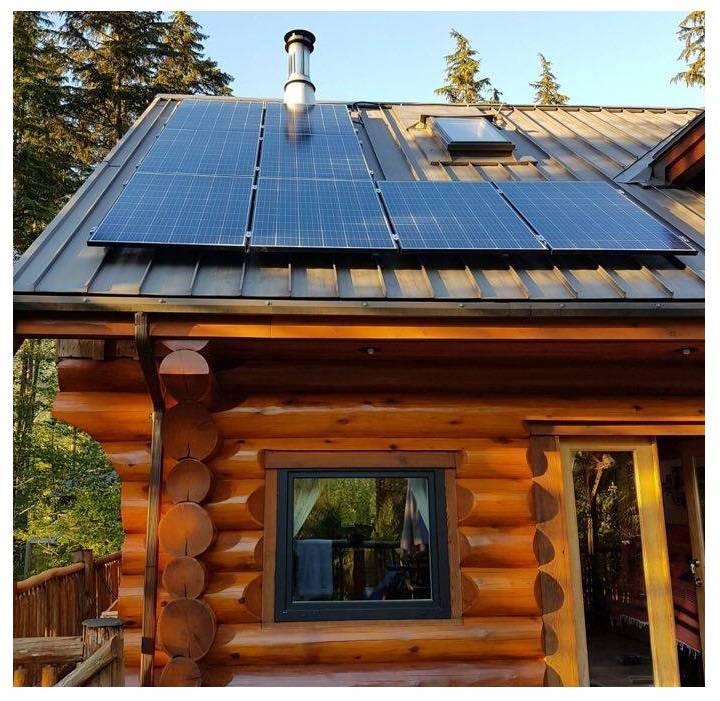
Environmental friendliness is an important part of today's home and business lighting solutions. Solar panels and LED strip lighting are an excellent alternative to traditional lighting methods, as they are much more energy efficient and durable. Solar panels and LED strip lighting is therefore the perfect solution for environmentally friendly lighting.
Solar panels and LED strip lighting
Solar panels and LED strip lighting are a natural and perfect pair. Next: how do solar panels work.
How do solar panels work?
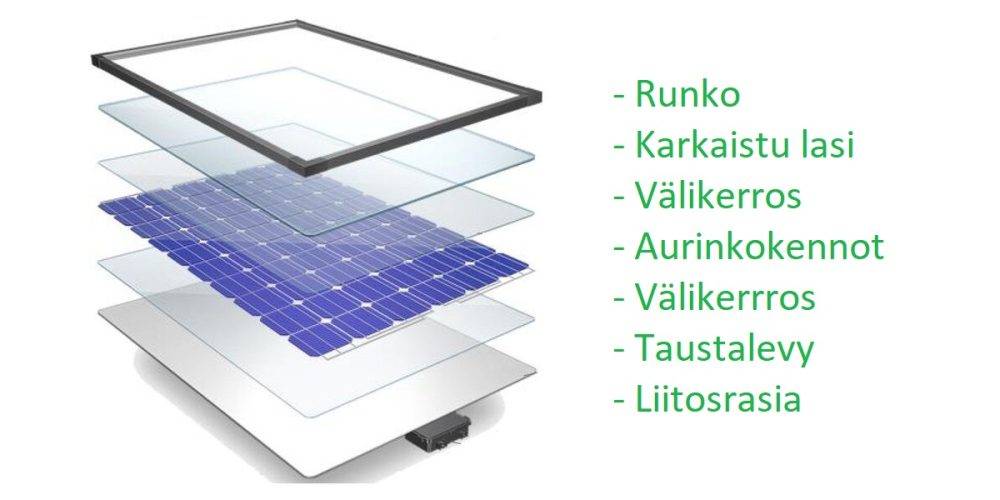
Solar panels are devices that convert sunlight into electrical energy. They consist of a number of solar cells, usually made of silicon. When sunlight hits the solar cell, it releases electrons that move through conductors, generating an electric current.
Solar panels are designed to generate direct current (DC), which can be fed into a battery. The battery can then be used, for example, as a power source for LED strip lighting. Solar panels are a great option for power supply, as they are environmentally friendly and easy to use (depending on the size of the system).
Solar panels generally have a very long lifetime and are virtually maintenance-free, making them an excellent choice for environmentally friendly lighting. Solar panels only require sunlight to generate electricity, which means they can be used anywhere the sun shines.
Solar panels and LED strip lighting - Combining
So solar panels and LED strip lights are a good match because LED strip lights need a constant power supply to work and the solar panel acts as a power supply! Depending on the system, it can either use mains electricity (230V) through an inverter or operate entirely on direct current supplied directly from the battery system.
If the setup consists of a solar panel directly connected to a 12V battery system, all you need is a suitable 12V controller or switch to turn the LED strip on and off or to dim it.
If, on the other hand, the system uses mains electricity, the alternating current must first be converted into direct current. This can be done by using an inverter between the solar panel and the LED strip light. The inverter converts the AC current to a DC voltage suitable for the LED strip.
The advantage of a 230V system is that the rest of the house or cabin uses the familiar mains electricity supplied through standard power outlets. The downside, however, is the energy loss that occurs when electricity is converted from direct current (generated by the solar panels) to alternating current (via the inverter), and then back to direct current again for the LED strip lighting.
What size solar panel do you need for LED strip lighting?
The size of the solar panel depends on how much electricity the LED strip needs to operate. The required size of the solar panel depends on the length and power consumption of the LED strip. If you want to use a solar panel to power an LED strip light, it is important to choose the right panel designed to work with the LED strip light (12V or 24V).
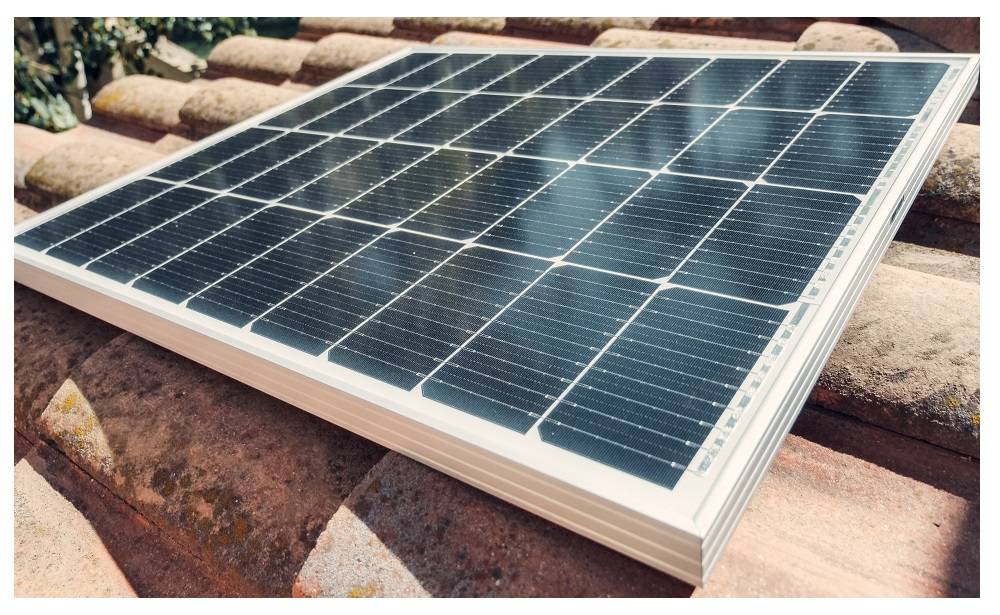
Batteries and LED lights - Best practices to improve battery life
How battery life affects the use of LED lights
If the battery capacity is too low, you will need to replace or recharge it more frequently. So when buying lighting, consider the capacity of your solar panels and the size of your battery.
A battery is not strictly necessary for the system to function — LED strips can even be connected directly to a solar panel. However, in that case the lights will only work while the sun is shining. When you want lighting in the evening, the electricity comes from the battery that was charged during the day.
How you can improve the battery life of LED lights
There are several ways to improve the battery life of LED lights. One way is to use a high-quality battery designed to last a long time and provide reliable power. It is also important to take proper care of your battery to extend its life. For example, avoid overcharging and do not allow the battery to be stored for too long on a full charge.
Burn time of LED lights - How long they last
What is the difference between Ah and A values?
Ah (ampere-hour) is a unit used to describe the capacity of a battery, i.e. how much electricity the battery can store. A (ampere) is a unit that describes the current that LED lights use to operate.
How long do LED lights stay on for on battery power?
The burn time of LED lights depends on the capacity of the battery and the efficiency of the LED lights. In general, LED lights can stay on for several hours on a single battery charge.
For example, if a battery is 100Ah, 12V, it means that it can provide 100 hours of power at 1 Ampere.
1 ampere of 12V means 12W. In other words, the battery lasts for 100 hours at 12W per metre of LED strip.
So if you have 10 metres of 7.2W per metre (6A 12V) LED strip in your cottage to light up the living room and kitchen and you keep them on continuously, they will last 16.6 hours before the battery runs out.
Calculating solar cell and battery size
The example image below shows a cabin design where 14.4W LED strips have been planned for the main indoor lighting, while 7.2W LED strips are used outdoors, in the sauna, and for ambient lighting.
The total power requirement is 200W indoors if everything were on all the time for some reason and 72W outdoors. In addition, there would be a few pendant lights with about 7W LED bulbs.
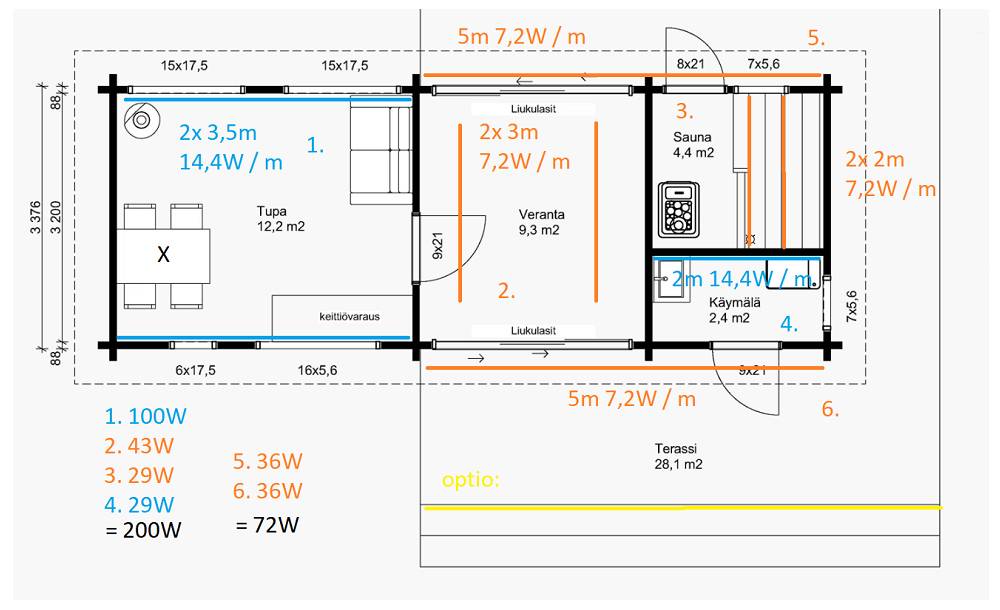
So in practice, you should size the solar cells at 400W and reserve 2x100Ah batteries for lighting.
If the sun shines for 8 hours on the cells, it will theoretically provide 8x 400W = 3200W / 12V or 266A, of which in practice part will be used already in the early evening , so a 200Ah battery is enough to provide surplus electricity for the evening and night.
If the lights are on for 6 hours in the evening = 6h x (200W + 72W) = 1632W = 136Ah. That way the battery lasts and you have some room to play.
The calculation takes liberties and assumes that conditions are always the same. On the other hand, hardly all the lights are on at the same time. And there was still the option to light the terrace stairs.
How to extend the burn time of LED lights with a battery
The on-time of the LED lights can be extended by using a high quality battery, designed to last a long time and provide reliable power.
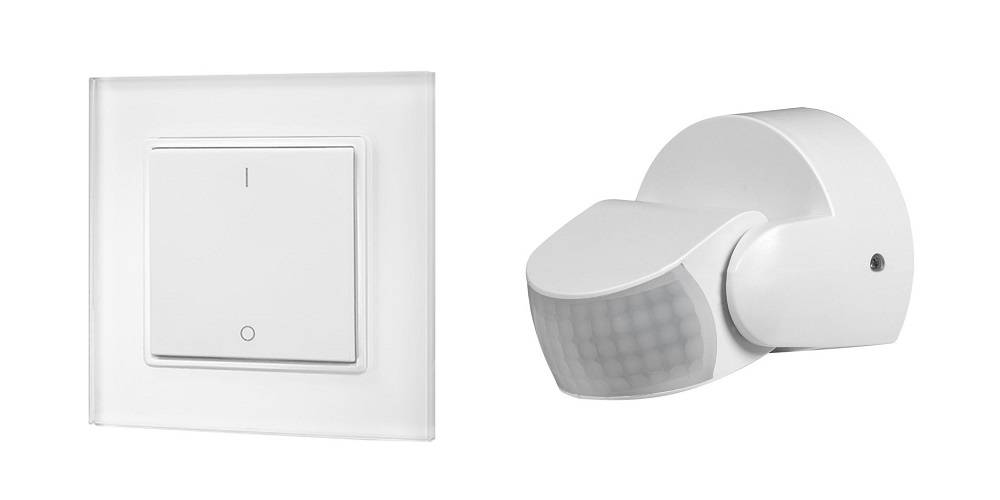
Another way to extend the burn time of LED lights is to use dimmers or timers that automatically turn the lights off when they are not needed. This helps reduce energy consumption and saves battery power in the long run.
How to choose the right LED light for your application
So first find out if your solar panel is providing, for example, 12V/24V directly or if you have an inverter in between that provides 230V.
Once you have this sorted out, if necessary buy a driver for the led strip if your system is 230V, but otherwise just get a 12/24V led strip and connect it directly to the battery.
For the power of the led strip, you need 7.2W or 14.4W led strip, but which one depends on the installation site. More light on the worktop than for creating atmosphere or outdoors.
Led strips outdoors
How to choose an LED strip light that can withstand outdoor conditions
When choosing an LED strip light for outdoor use, make sure it is designed to withstand outdoor conditions such as humidity and temperature fluctuations. In practice, an outdoor LED strip light is IP65 protected. More on IP rating.
How to install LED strip lighting outdoors
Installing LED strip lighting outdoors can be a little more challenging than indoors, but it's still easy once you know what you're doing. First, choose an LED strip light designed for outdoor use. Also, make sure that the voltage of the LED strip and the battery or solar panel match to avoid damage.
Next, choose a suitable installation location. The LED strip light can be installed on, for example, terrace railings or stairs. Make sure you install the aluminium profile of the LED strip for a durable and stationary finish. Screw the profile brackets in place and snap the profile into place. Glue the LED strip in place and you're done.
Once you have installed the LED strip light, connect it to the battery and test the lights before leaving them on for a longer period. You can use timers or motion sensors that automatically turn off lights when they're not needed to save energy and extend battery life.
LED strip lighting solutions:
Product gallery: Pictures of PRODUCTS in different installation locations
Indirect light: Indirect light in different spaces
Room-specific: Light in different rooms
References: Complete houses that have been photographed
FAQ
1. Voiko aurinkopaneeleita käyttää LED-valonauhojen virtalähteenä?
Yes, solar panels can be used to power LED strip lighting. Solar panels produce renewable energy that is stored in a battery. The battery provides the necessary power to the LED strip lights via a charge controller, which ensures a safe and steady energy supply.
2. Miksi yhdistää aurinkopaneelit ja LED-valonauhat?
Combining solar panels with LED strip lighting is an environmentally friendly and energy-efficient solution. LED lights consume little energy, so the electricity produced by the solar panels is sufficient. This combination reduces electricity costs and allows lighting in off-grid areas.
3. Mitä komponentteja tarvitaan aurinkopaneelijärjestelmässä LED-valonauhoille?
The following components are required for a solar panel system for LED strip lighting:
4. Kuinka mitoittaa aurinkopaneelit LED-valonauhoja varten?
The sizing of the panels is based on the daily energy demand of the LED strips. Calculate the total power (W) and the operating time (h) of the strips to get the required energy (Wh). Select panels that can produce this amount of energy during the day, and make sure that the battery can store enough energy for night use.
5. Tarvitaanko lataussäädin LED-valonauhojen kanssa?
Yes, a charge controller is essential, as it protects the battery from overcharging and regulates the power supply. The charge controller also helps to ensure that the LED strips receive a steady and safe current, thus extending their lifetime.
6. Kuinka suuri akku tarvitaan LED-valonauhoille aurinkopaneelijärjestelmässä?
The battery is sized according to the daily energy demand of the LED strips. Calculate the total power of the strips and multiply it by the operating time. Choose a battery with a capacity (Ah) at least 1.5 to 2 times higher than the daily power demand, so that the battery lasts longer and can store energy even on cloudy days.
7. Voiko himmennettäviä LED-valonauhoja käyttää aurinkopaneelien kanssa?
Yes, dimmable LED strip lights can be used in a solar panel system. However, it is important to ensure that the control system supports dimming and that the battery is able to supply sufficient power at different brightness levels. Dimming can help save energy and extend battery life.
8. Mitä tehdä, jos aurinkopaneelijärjestelmä ei tuota tarpeeksi energiaa LED-valonauhoille?
If your solar panel system is not producing enough energy, consider installing more efficient solar panels or increasing the number of existing panels. You can also increase the capacity of the battery to store more energy on cloudy days. Energy efficiency can be improved by using dimmable LED strip lights or by reducing the time the strip lights are on.
9. Kuinka huoltaa aurinkopaneelijärjestelmää LED-valonauhojen kanssa?
Maintain your solar panels regularly by cleaning them of dust and dirt to keep them efficient. Check the condition of the battery and make sure it is not overloaded. Test the charge controller and wiring to make sure they are working properly. LED strip light connections should be checked regularly and any damaged parts should be replaced in time.
10. Onko aurinkopaneelien käyttö LED-valonauhojen kanssa kannattavaa?
The use of solar panels with LED strip lighting pays off in the long run because it reduces energy costs and makes use of renewable energy. The initial investment may be higher, but the energy savings and environmental friendliness make it a sustainable and economically sound solution.