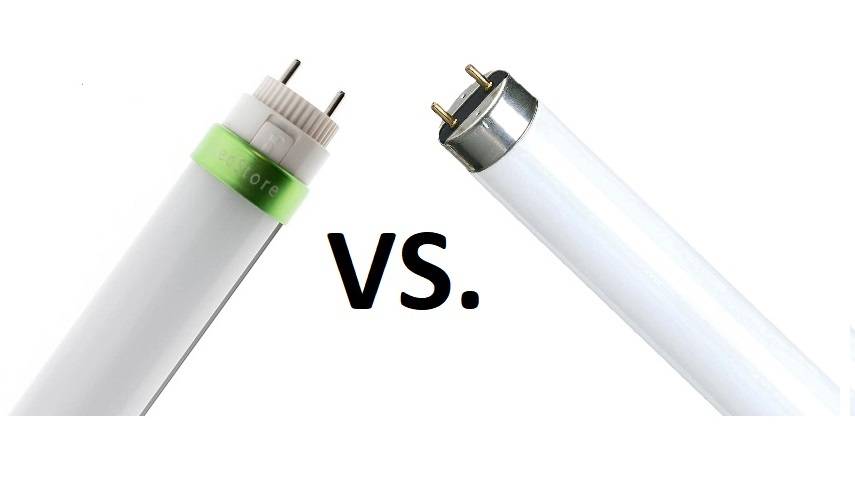
The choice of light sources is influenced by economic and environmental considerations. LED tubes vs. fluorescent tubes are the focus of this article, as both have their advantages and disadvantages. I will compare the two technologies in terms of energy cost and efficiency, light quality and colour rendering, environmental impact and cost and investment.
Led tubes vs. fluorescent tubes
By going through the different technical characteristics, the differences between LED lights and fluorescent tubes are better understood. Energy costs are important for consumers and businesses alike, as they affect the potential for electricity savings and carbon emissions.
The quality of light has an impact on people's well-being, the comfort of spaces and commercial presentation.
Environmental impacts, such as the ratio of materials to energy consumption and the lifetime of lights, are important for sustainable development.
The comparison of costs and investments takes into account purchase prices and long-term savings, as well as any subsidies or taxes.
Overview of LED and fluorescent tubes
LEDs are a newer lighting technology than fluorescent tubes, based on semiconductor technology. They produce light as electrons pass over the semiconductor material and release their energy as light.
Fluorescent lamps, on the other hand, are based on the gas discharge phenomenon: they produce ultraviolet energy as a result of the discharge and this energy is used by the phosphor layer to convert UV radiation into visible light. Fluorescent lamps have been widely used in lighting applications such as offices and industrial premises for decades. In the past, they have had the advantage of higher efficiency compared to, for example, incandescent lamps, but as LED technology has developed, the difference has narrowed or even swung in favour of LED lights. Since then, fluorescent tubes have been discontinued and replaced by LED tubes.
When replacing fluorescent tubes with LED tubes, remember that it is important to recycle fluorescent tubes, as they contain harmful mercury and other environmentally hazardous substances.
Energy consumption and efficiency
Energy savings and lifetime are important factors in assessing the efficiency and cost of lighting solutions.
When comparing LED lights and fluorescent tubes, the following energy-saving factors can be considered:
- Energy consumption: LEDs use less energy to produce the same amount of light as fluorescent tubes, resulting in greater energy savings.
- Lifetime: LED lamps have a much longer lifetime than fluorescent lamps, reducing the need for lamp replacement and the associated costs and resources.
- Heat dissipation: LED lamps produce less heat than fluorescent lamps, which can also reduce energy consumption for air conditioning and cooling.
- Instant full light output: unlike fluorescent tubes, LED lights reach their full light output instantly when switched on. This means that they do not spend extra energy 'warming up' before they are at their most efficient.
The energy-saving potential of LED lights is therefore significantly higher than that of fluorescent tubes. This will allow both households and businesses to reduce their electricity bills and at the same time reduce the burden on the environment. Improving energy efficiency is important for sustainable development, and modern lighting technology offers significant opportunities to achieve these goals.
Lifetime
Advances in lighting technology offer good opportunities for cost savings and reduced environmental impact thanks to their long lifetime. LED lights are more durable than traditional fluorescent tubes, with an average lifetime that is often many times longer. The lifetime of a Led tube is around 25 000-70 000 hours, while fluorescent tubes usually last 10 000-20 000 hours.
This means fewer LED replacements are needed and in the long run it saves costs. The lifetime of Led tubes and fluorescent tubes is affected by the design and electronics of the tube.
So-called
compatible LED tubes tend to be shorter-lived, as they contain electronics that have to work with old chokes and igniters.
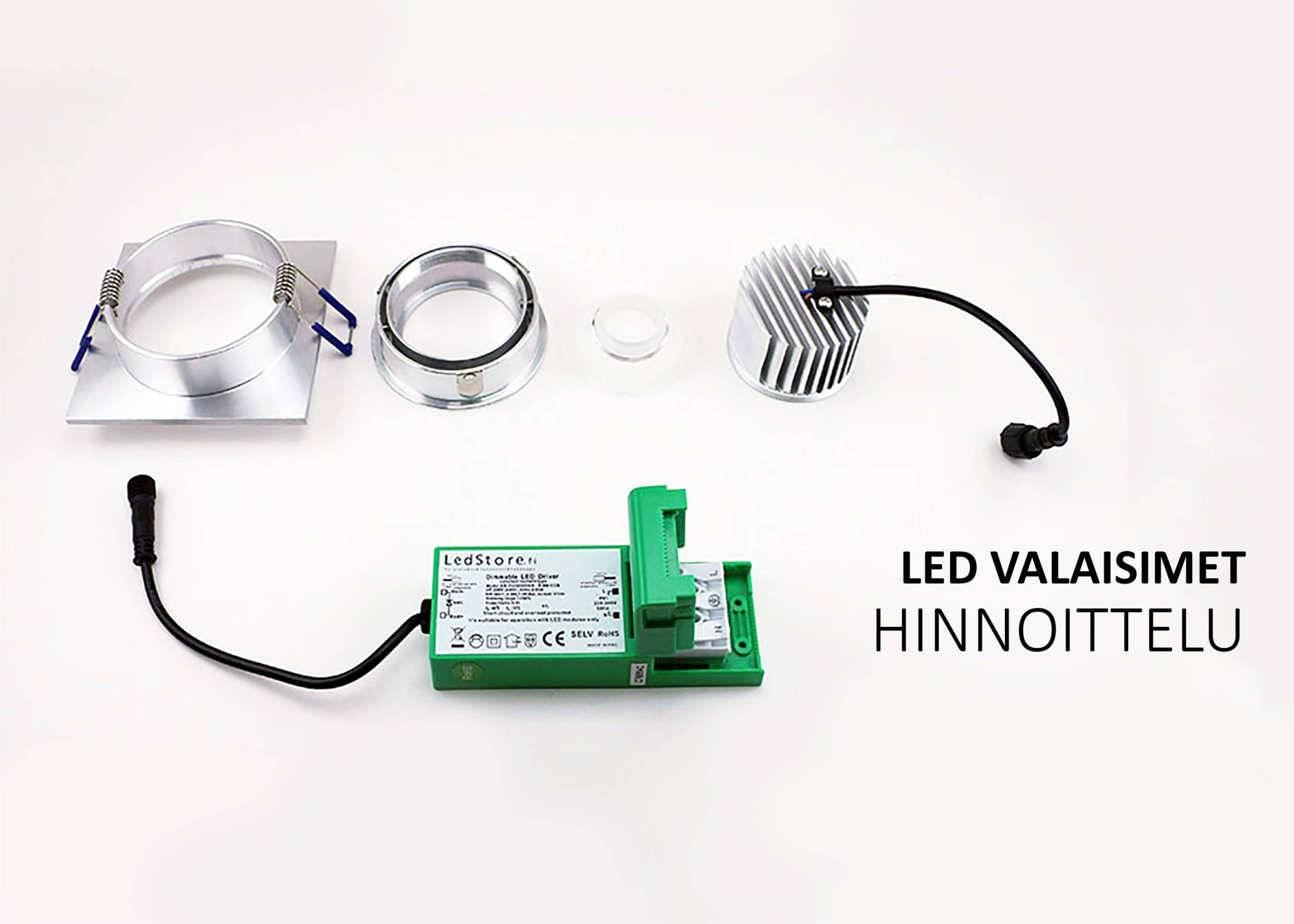
Single-end LED tubes, on the other hand, are very durable, but require modifications to the light body, which is electrical work.
The lifetime of LED lamps is also associated with lower maintenance costs and better reliability, reducing disruption in commercial or industrial environments, for example.
High-quality light and colour reproduction
Light quality and colour rendering play an important role in the comfort and well-being of people, so it is important to compare lighting solutions. LED lights and fluorescent tubes differ in many aspects, such as light adjustability and colour temperatures. By taking these factors into account, an optimal solution can be found for different applications.
The adjustability of LED lights is one of their biggest advantages over fluorescent lights. LED lamps usually allow for better dimming, which can improve the comfort and energy efficiency of the room. When comparing colour temperatures, LED technology also offers a wider range of warm and cool tones, giving more options for creating different moods or optimising working conditions. By contrast, fluorescent lamps have a more limited range of colour temperatures and most cannot be dimmed.
While both lighting technologies provide adequate colour rendering in most applications, LEDs are generally a better choice for situations where a higher colour rendering index (CRI) value is required.
A high CRI value means that the lamp is able to reproduce the colours of objects naturally and without distortion. This feature is particularly important in places such as art galleries, shops and other spaces where natural colour reproduction is key. Thus, in terms of light quality and colour rendering, LEDs offer more versatile and flexible solutions than fluorescent tubes.
Environmental impact
A comparison of the environmental impact of lighting technologies shows that LED lights have a smaller ecological footprint than fluorescent lights. LED lights are more energy efficient and reduce electricity consumption and environmental emissions. Fluorescent lamps are less energy-efficient and their disposal is a challenge because they contain harmful substances such as mercury.
LED lights are easier to recycle and generate less waste. However, the production of LED lights requires more rare metals and other valuable materials than the production of fluorescent tubes. Overall, however, LED lights have a lower environmental impact than fluorescent lights.
Costs and investments
A cost comparison of lighting technologies shows that the investment and operating costs of different solutions can vary significantly. LEDs and fluorescent tubes are the two most common lighting solutions, each with their own advantages and disadvantages in terms of cost and investment. When comparing investments, not only the purchase price but also energy efficiency, lifetime and possible maintenance and repair costs must be taken into account.
LED lights can have a shorter payback period than fluorescent lights, although their purchase price may be higher. This is because LED lights consume less energy and have a longer lifetime than fluorescent tubes. Reduced energy consumption means lower electricity costs in the long run, which compensates for the higher initial price. In addition, the lower maintenance and repair costs of LED lights further reduce the overall investment.
Lower initial investments can be expected for fluorescent tubes compared to LED lights. They may therefore be an attractive option for short-term cost savings. However, the lower energy efficiency and shorter lifetime of fluorescent tubes means that their total cost of ownership is often higher in the long term. From an environmental point of view, it should also be noted that fluorescent tubes contain harmful substances such as mercury, which imposes special requirements for their recycling and disposal. As a result, more and more organisations are choosing to invest in LED lights.
Frequently asked questions
How do the lifetimes of LED lights and fluorescent tubes compare?
For example, in a large office building where lighting is on for a large part of the day, the lifetime of the light sources is a significant factor in terms of cost and environmental impact. The lifetime of LED lights is estimated to be significantly longer than that of fluorescent tubes - up to more than 50 000 hours compared to the average 10 000-20 000 hours for fluorescent tubes. As a result, LED costs may be lower in the long run, although their purchase price may be higher.
How easy or difficult is it to install and maintain LED tubes compared to fluorescent tubes?
The installation and maintenance costs of LED lights are generally lower than those of fluorescent lights over the longer term.
When buying led tubes you have to decide whether it is a single-end tube that requires modifications to the light body (electrical work) OR a compatible led tube.
A compatible LED tube is simply installed in place of the old tube. The SIngle-end often lasts up to half as long because it does not contain unnecessary electronics that have to withstand igniters and chokes.
What is the heat produced by LED lights and fluorescent tubes and can it affect the room temperature?
Led lights and fluorescent tubes differ significantly in terms of heat output and energy efficiency. Led lights produce less heat than fluorescent tubes, due to their higher energy efficiency. Up to 80% of the electricity used by LED lights is converted into light, while only 20% is heated.
Fluorescent tubes, on the other hand, convert only about 40% of the energy they receive into light, while the rest is lost to the environment as heat.
This may lead to additional heating requirements or localised heat build-up in fluorescent-lit areas. It is also important to take into account the effects of internal infrared radiation and the maintenance needs of the equipment over its lifetime. LED lights are often cheaper for long-term use.
Are there different LED lights and fluorescent tubes for different uses and spaces?
Advances in LED technology have led to a wide range of LED lights and fluorescent tubes suitable for different applications and spaces. Specific lighting requirements, such as colour temperature, light output and control options, can be precisely met by choosing the right products.
Industrial and commercial premises, for example, often require efficient and long-lasting lighting, while comfort and ambience are more important in the home. For warehouses, cheaper LED tubes with lower colour rendering are usually suitable. In the office and home, more power and better quality light is required.
How do LED lights and fluorescent tubes affect the health and well-being of people's eyes?
Eye fatigue can feel like a heavy burden at the end of the day. This is often due to the intensity and spectral quality of the light emitted by the light sources. Studies show that both LED lights and fluorescent tubes can affect people's eye health and well-being in different ways.
LED lights produce less blue light, which improves sleep quality and reduces exposure to the harmful effects of blue light, and good quality LED lights do not flicker.
Fluorescent lamps can cause glare and flicker, which increases eye fatigue in the long term, and are often lower quality light sources.
Conclusion
In summary, a comparison of LED lights and fluorescent tubes highlights significant differences in energy efficiency, light quality, environmental impact and cost. Significantly, LED technology has evolved rapidly and outperforms traditional lighting solutions in many aspects. For example, LEDs consume up to 80% less energy than fluorescent tubes and provide the same or better lighting levels.
In addition, the improved lifetime and reduced environmental impact of LEDs make them an increasingly attractive option for both residential and commercial applications. It is therefore important that consumers and businesses carefully consider the benefits and drawbacks of each lighting solution when determining which option best suits their needs.
Led lighting expert
LedStore has been an expert in led lighting since 2010. We have our own product design, so our products are technologically state-of-the-art. We focus on colour temperature adjustable and high colour rendering (CRI) lights. We do around 500 lighting designs in a year.
Check out LedStore's own brand led tubes
here. We offer a service of
custom-made led strips, i.e. made-to-order, easy to install led strips in profiles for everyone. Also
installed.
Remember that we are always ready to offer our help to you along the way, by email
(myynti@ledstore.fi) and by phone (045 251 4510). Feel free to share photos of your own projects on social media #ledstore.fi on IG and ledstorefinland on FB. We love to see the cool things you can do with our LEDs, and it helps to provide inspiration for those who are still not quite sure about the power and awesomeness of LEDs.
Did you know that we already have over 3 500 pictures of our LED installations in our Gallery!
Gallery of Led lights:
Product gallery: Pictures of PRODUCTS in different installation locations
Indirect light: Indirect light in different spaces
Room-specific: Light in different rooms
References: Complete houses that have been photographed