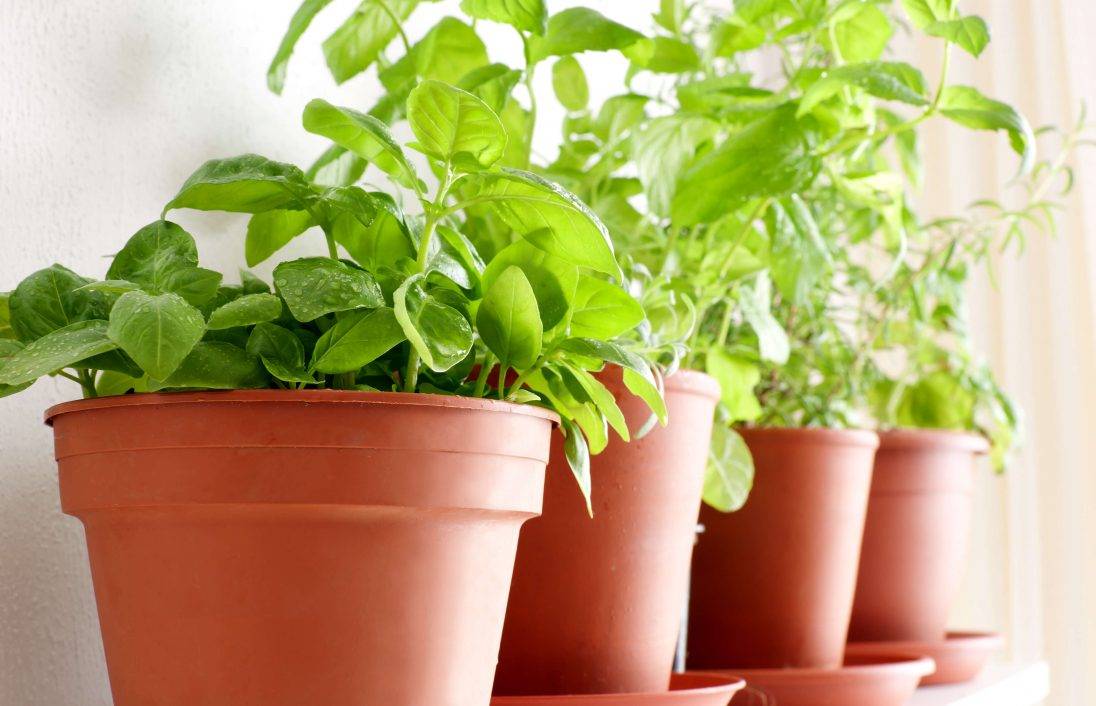
The use of Led bulbs as plant lights e.g. have become popular for nurseries in the last few years, partly because LED bulbs as plant lights do not heat up as much as energy-saving bulbs, not to mention incandescent bulbs. Good quality LED lamps are also more energy efficient than energy-saving lamps. The Led-list is a good option for lighting plants at home and in the office if you want light for longer distances.
The most important feature of a plant light is that it has a high blue and red wavelength. These wavelengths allow the plant to feel like it is in natural light. Instead of buying blue-red light to ensure the wellbeing of houseplants at home, it's worth investing in good quality, high CRI (colour rendering index) general-purpose luminaires that everyone can enjoy.
Information on the blue and red wavelengths of light from an LED lamp
The blue and red wavelengths of light vary in nature at different times of the day and in different parts of the Earth. In addition, the amount of light - the length of the day - varies, which contributes to which plants thrive in which parts of the world. To achieve effective growth, for example. Those familiar with growing chilli prefer LED plant lights that produce a blue-red light.
They harness the blue wavelengths (nanometres, nm), i.e. 380-400 nm and about 430 nm and 450 nm, and the red wavelengths, i.e. about 610 nm, 620 nm and 650 nm, and the infrared 730 nm, in a single lamp.
By producing only the wavelengths that optimise seedling growth and flowering, the plant light provides plenty of light output and keeps the energy consumption of the light at a reasonable level.
Some of the lamp's LEDs also produce white light, making it easier to see.
It is advisable to wear effective sunglasses or other UV-protective goggles when exposed to the blue-red light, as the light is foreign to the human eye and also contains harmful blue light wavelengths of 380-400 nm. Plant cultivation usually takes place in a dedicated area, where no one is present at the same time.
In the adjacent figure, the wavelengths of light produced by the LED plant light are shown with black vertical lines. The blue-to-red spectral pattern in the picture is an example of the continuous spectrum light produced by our LED spots. Thus, a Led plant light (black vertical lines) produces only a small fraction of the wavelengths of visible light. LedStore luminaires, like LED general purpose luminaires, do not emit wavelengths below 400 nm, i.e. UV radiation. So they are not uv plant lamps.
Led bulbs as plant lights to maintain growth without blue-red lights - pay attention from September onwards
During the dark season, when there is not enough natural sunlight, plants benefit from good quality artificial light.
For example, Biolan advises to pay attention to adequate light and humidity from September onwards, when the growing season gradually ends and the day length is reduced to less than 12 hours. Light and humidity have a crucial influence on the well-being of plants. Led light is suitable for supplementary lighting of plants, as it does not produce heat, which dries out the plant. Depending on the amount of light and the plant's care, the plant will either overwinter or continue to grow during the dark period.
A good quality LED light produces white light that reproduces the entire light spectrum in a health-safe light range. A good quality LED luminaire has a very high CRI of over 95. In this light, it is good for both people and plants.
By choosing the right lamp types and light levels, light can be directed directly to the plants that need extra light. On average, LED lighting is about 8 times more energy efficient than comparable older technology lighting solutions. Yet the heat gain is up to dozens of times lower.
The LedStore range of lights over CRI 95 includes almost all LED spotlights, such as
- Our powerful omnidirectional 12W spotlight innovation, Kolo, with high colour rendering CRI 98 and variable light hue
- E27 high colour rendering LED bulb and
- GU 10 bulb and MR16 bulb replacing halogen
- Led fluorescent tubes for plants should be chosen from the daylight tubes, either 60 cm, 120 cm or 150 cm long.
- and LED rails made of aluminium profiles, which can be suspended at the desired height above the plants. High quality light strip, CRI 98 is selected according to the desired light output.
Plant light with led strip and aluminium profile
The advantages of the LED strip light as a plant light are that it can be brought close to the plant and the LED strip gives light evenly over its entire length, allowing more plants to receive light at once.
For example, in the prefabricated LED plant lighting frame we customized for a customer, a 74 cm long colour temperature adjustable 14.4 W/m SOLO CCT LED strip with a plant shelf in the middle is used. The colour temperature of the light can be easily adjusted to the desired Kelvin level with a wireless controller. For example, a daytime led ribbon plant light can give plants a cold white daylight, i.e. it is a so-called.
a daylight lamp, and when you get home in the evening, you can set the lamp to a warmer white colour temperature to suit your mood and evening mood. You can find the full article on our blog under the title: led plant lighting increases plant well-being in the dark.
What is the colour rendering index measured by CRI?
The quality criterion for all LedStore luminaires is a high colour rendering index. The colour rendering index, measured by the CRI value, indicates how balanced the light from a luminaire is and what colours things look like. If a region of the colour spectrum is poorly reproduced in a luminaire, it means that the colours are distorted in terms of vision. For example, a luminaire will fold too much in green, blue, grey or purple. Plants also do not thrive in poor colour rendering light. Luminaires with a lower colour rendering index are not good LED plant lights.
The light source that has a colour rendering index very close to 100, and which many of us can remember from our sensory perceptions, is our familiar incandescent light bulb. Incandescent light bulbs, which were discontinued due to poor energy efficiency, reproduced colours well, but also heated up wildly and consumed a lot of electricity in relation to the amount of light they produced. In contrast, LED lamps for plant lighting consume little energy and do not heat up.
In the video below, at 0:47 - 1:50 in the video, we see that the colours are actually less reproducible in a lower quality LED light. In addition, the colour rendering is reported over a narrower range. For example, the red tones needed by plants may be completely absent in a lower quality LED. A parallel concept to CRI is Ra, and there is some variation in the way LED manufacturers measure and label LEDs, which can make it difficult to find a good quality LED. Light properties other than colour rendering also affect the quality of light, but colour rendering is one of the most important characteristics of LEDs.
https://www.youtube.com/watch?v=rM4Wvd5f7vI
Good LED lamps provide plants with the wavelengths they need
In the following figure, you will notice that when choosing LED lamps for plant well-being, it is the bright reference colours such as red and blue, which plants also like, that are reproduced at a very high level in a high colour rendering index lamp. This light has a CRI of 97 and is suitable for lighting houseplants and maintaining growth at home. High CRI LED lamps for plant lighting work by selecting a high enough amount of light output. The greater the amount of light, the greater the amount of red and blue wavelengths that plants receive, and the better LED bulbs are as plant lights. The amount of light a plant needs (in lumens) varies greatly depending on the species and the time of year.
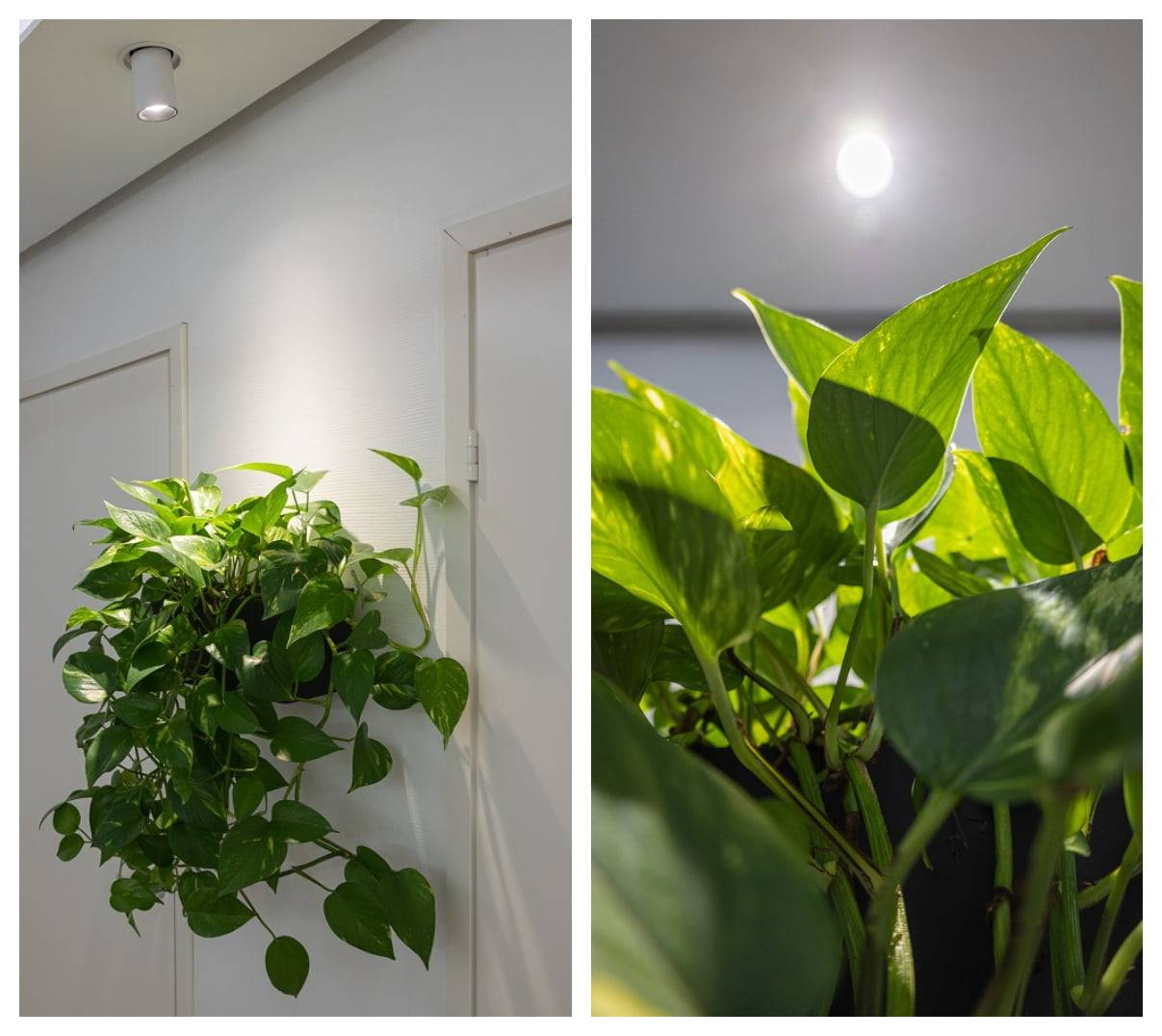
The light can be measured with a lux meter, and for example, the KOLO 12W spot at 60 cm from the plant has 12 000 lux, enough to keep a Golden Vine in growth mode all winter long.
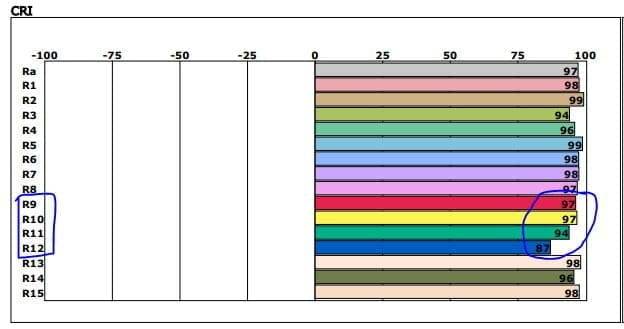
The CRI of LedStore luminaires is always measured with internationally agreed r-values of 1-15. There are pastel colours, bright colours, different shades of green and, for example, skin tone R13. For its own measurements, LedStore uses a certified device for measuring the properties of light.
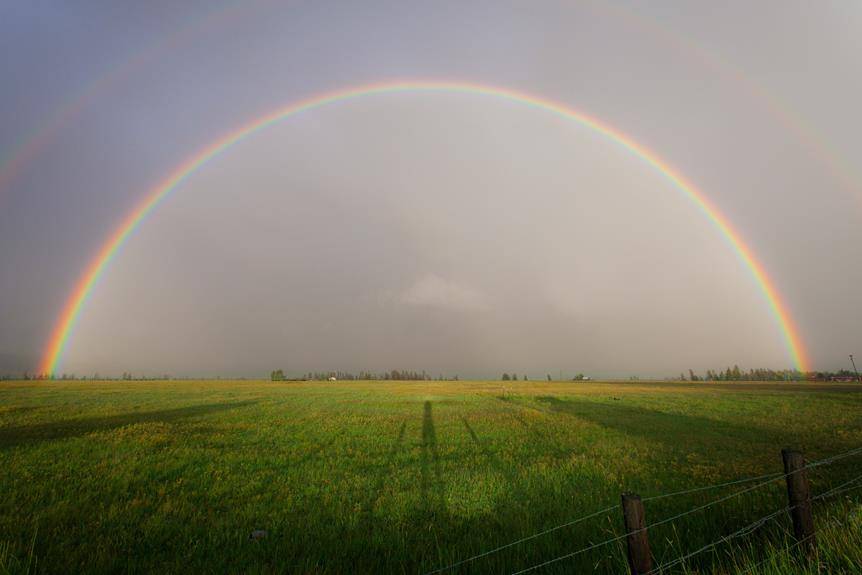
In English, our luminaires are full spectrum with high colour rendering. In Finland, we talk about continuous spectrum lights. The colours repeat like a rainbow: from violet, blue, green, yellow and orange to red.

Welcome to the shop to see the products and sample spaces. Our online store is located at ledstore.fi, our store is located in Koivuhaa Mesikukantie 16, 01300 Vantaa. You can also contact us by email at sales @ ledstore.fi and by phone on 045 251 4510.
1. Miten LED-lamput vaikuttavat kasvien hyvinvointiin?
LED lamps provide plants with an optimum light spectrum that supports photosynthesis and plant growth, allowing precise adjustment of the amount and quality of light at different stages of growth for healthier growth, stronger leaves and better flowering. In addition, LED lights produce less heat, reducing the risk of overheating and improving overall plant well-being.
2. Mikä valon spektri on paras LED-lampuille kasveille?
Plants particularly benefit from blue (400-500 nm) and red (600-700 nm) light. Blue light promotes leaf growth and strengthens plant structures, while red light supports flowering and fruit formation. Multi-colour LED lights, covering a broad spectrum, can provide balanced lighting that supports all stages of the plant life cycle.
3. Mitkä ovat LED-lamppujen edut verrattuna perinteisiin lamppuihin kasvien valaistuksessa?
LED lamps are more energy efficient, longer lasting and produce less heat than traditional lamp types such as HID or sodium lamps. They also offer more precise light control, allowing optimal lighting at different stages of growth. In addition, LED lamps are more environmentally friendly as they do not contain mercury and have a lower carbon footprint.
4. Kuinka valita oikea LED-lamppu kasveille?
The choice of the right LED lamp is based on the type of plant, its growth stage and lighting requirements. Check the light spectrum of the bulb and make sure it covers the blue and red wavelength ranges. Also consider the lamp's wattage (in watts), light output (lm/m²) and IP rating, especially if the lamp will be placed in humid areas. Multi-colour and adjustable LED systems offer flexibility for different growing conditions.
5. Kuinka LED-lamput vaikuttavat kasvien energiatehokkuuteen?
LED lamps are highly energy-efficient, converting a large proportion of their energy into light and reducing heat losses. This means that they use less electricity to produce the same amount of light as conventional lamps. In addition, LED lamps last longer, reducing maintenance costs and energy consumption in the long term.
6. Mitä virheitä välttää LED-lamppujen käytössä kasvien kanssa?
Avoid too high or low light intensity, which can stress the plant or reduce growth. Ensure that the light spectrum is appropriate for the needs of the plant and that LED lamps are properly cooled to prevent overheating. In addition, avoid constantly increasing the amount of light without giving the plants sufficient resting time in the dark. Also ensure the correct spacing between the lamp and the plant for optimum light.
7. Kuinka pitkään LED-lamput kestävät kasvien valaistuksessa?
High-quality LED bulbs typically last 30 000-50 000 hours or more, making them a long-lasting option for plant lighting. The lifetime can vary depending on the quality of the lamp, the conditions under which it is used and how it is cared for. A well-maintained LED lamp can serve plants for many years without significant light degradation.
8. Voiko LED-lamppuja käyttää sekä sisä- että ulkokasvien valaistuksessa?
Yes, LED lamps can be used for both indoor and outdoor plant lighting. For indoor growing, LED lamps provide perfect lighting that can be tailored to the needs of the plant. However, for outdoor growing, it is important to choose LED lamps that are IP rated and resistant to varying weather conditions such as rain and humidity.
9. Miten asentaa LED-lamppuja kasvien hyvinvointia varten?
Installing LED bulbs for plants starts with choosing a suitable location where the plants will receive even light. Switch on the LED bulbs to match the spectrum and intensity of light to the needs of the plants. Place the bulbs at the right distance from the plants so that they get enough light without overheating. If necessary, use light reflectors or light diffusers to optimise light distribution. In addition, use timers or intelligent control systems to ensure that plants get the right amount of light every day.
10. Onko LED-valaistus ympäristöystävällistä kasvien hyvinvoinnissa?
Yes, LED lighting is an environmentally friendly choice for plant welfare. They consume less energy than conventional lights, reducing carbon emissions. In addition, LED lamps are long-lasting, which reduces waste. They do not contain harmful substances such as mercury and their low temperature reduces the need for cooling in the environment.