
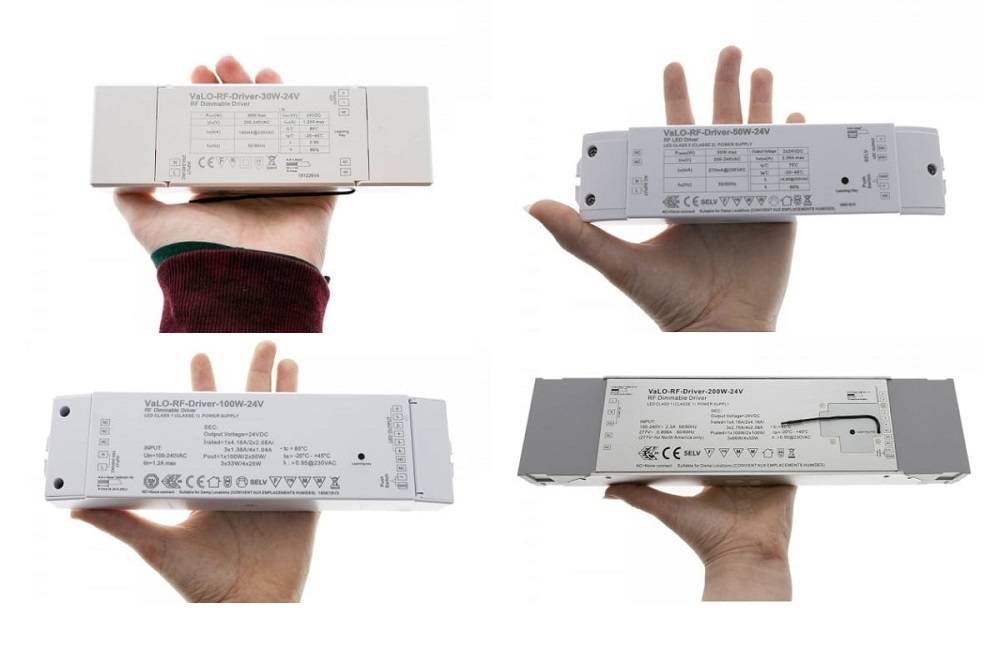
The led driver controls how much power an individual led or group of leds receives. LEDs, or light-emitting diodes, are low-energy light sources with a long lifetime and low energy consumption. This is why they need specialised power supplies.
How do LED drivers work?
As the temperature of the LED changes, its forward voltage also changes. The hotter the LED gets, the less voltage is needed to pass current through the LED, so the LED uses more current. An uncontrolled rise in temperature will burn out the LED. The power levels of the DC (VDC) led transformer are designed to meet the needs of the LEDs in use. The constant current of the driver keeps the temperature of the LED circuit constant by responding to changes in forward voltage.
Purpose of led driver
The main functions of a Led driver are to provide low voltage and to protect the LEDs. Each LED can draw up to 30 mA of current and operate at voltages of approximately 1.5 V to 3.5 V. Multiple LEDs can be used in series and in parallel to create lighting that may require a total voltage of 12-24 V DC. In the case of a standard current-controlled (A) transformer, large luminaires with many LEDs can draw up to 80 volts. The Led driver converts the AC current to meet the needs of the LEDs and lowers the voltage. This means that the high alternating current (AC) main voltage of 230V must be converted to the required, often how low direct current (DC).
Led drivers also protect the LEDs from voltage and current fluctuations. Even if the power supply changes, the Led driver's circuits ensure that the current and voltage of the LEDs remain within the appropriate operating range. The protection prevents the LEDs from receiving too much voltage or current, which would damage them, or too little current, which would cause them to burn dimmer.
Various Led drivers
External vs. internal led driver
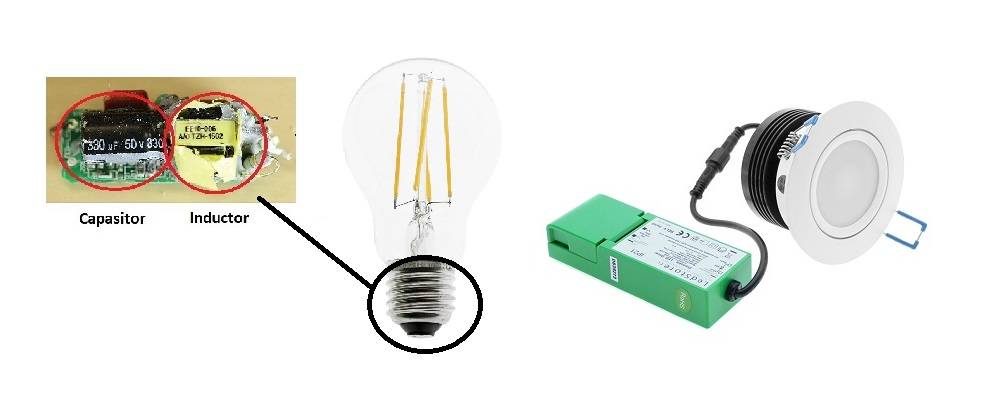
Most low-power indoor lights, especially bulbs, have built-in LED drivers. This makes the lights cheaper, but also shorter-lived due to the higher internal temperature of the LED.
Led downlights and led panel lights usually use external led driver, i.e. the driver is not built into the luminaire. When using high-power LED luminaires such as street lights, stadium lights and plant lights, external LED drivers are always used without exception.
This is because the internal temperature of the lights increases as the power used increases and if the transformer were inside the light, we would have two heat sources, which would make both worse and the life of both the LED circuit and the transformer would be shortened.
External Led drivers are also a better option from a maintenance point of view, as they can be easily replaced in case of failure.
AC power supply vs. linear
A linear led driver (Linear regular) is a type of led control circuit that controls the current supplied to the led using a linear regulator.
A linear regulator is a voltage regulator that uses a transistor to continuously vary the resistance to stabilize the output voltage. In the case of a linear LED driver, the output voltage is typically set to the forward voltage of the LED, and the linear regulator adjusts the resistance to keep the current through the LED constant. Often how these are the standard power supplies that come with a single LED light.
Linear LED drivers are simple and cost-effective, but they are less efficient than other types of LED drivers. This is because the linear regulator dissipates excess voltage as heat, leading to lower efficiency and higher power dissipation. Linear LED drivers are generally not suitable for high power lights or where energy efficiency is a critical requirement.
A switching power supply is a type of driver in which power is switched on and off at a rapid rate.
The AC to LED driver uses a high frequency switching circuit to convert the input voltage to a regulated output voltage. The switching circuit is typically implemented using a MOSFET or transistor, and an inductor. The input voltage is switched on and off at a high frequency (Hz), and the inductor stores and releases energy to stabilise the output voltage. The most common example is PWM dimmable power supplies.
Inverters are generally more expensive than linear regulators because they are more complex and have more components.
Insulated or non-insulated led driver
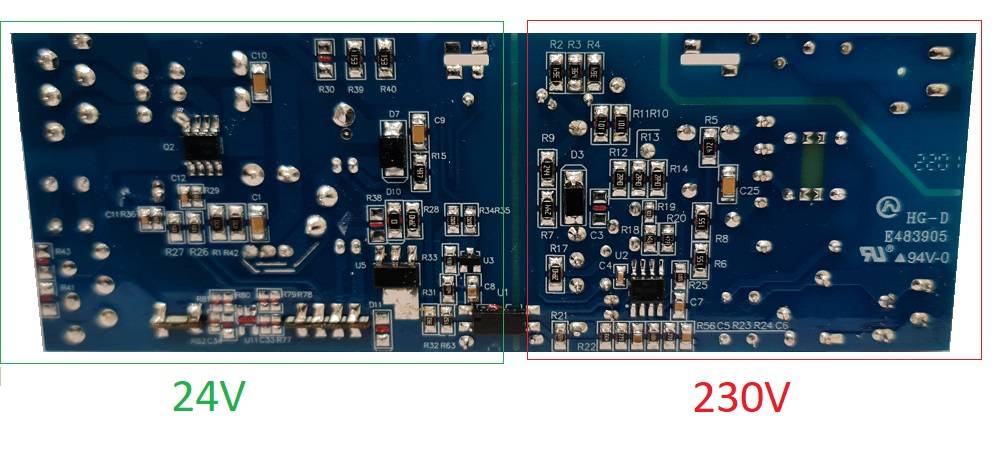
When comparing these two things, both are called AC power sources. According to UL and CE regulations, the input and output voltages of an isolated led transformer are well separated. To ensure safety, most of the high quality transformers are high insulation transformers. However, it increases the manufacturing cost of the driver. The insulation prevents high voltage from being transferred from the input to the output. In Finland, all drivers sold with LED lights should be insulated and are regularly tested by Tukes. The tests will cover issues such as:
- Dielectric strength test: this test checks that the driver can withstand high voltage without breaking. The controller is subjected to a high voltage test to ensure that it provides adequate electrical isolation.
- Insulation resistance test: this test checks the insulation resistance of the controller between the input and output sides of the circuit.
- Overload and overvoltage protection test: this test checks the driver's ability to protect the LED in overload and overvoltage situations.
- Leakage current test: this test checks the amount of current flowing from the input side of the controller to the output side.
- Continuity test of earthing (if the driver has earthing, Class I)): This test checks the continuity of the ground connection of the controller to ensure that it is properly grounded.
In practice, non-insulated LED drivers can be used, but they must always be installed in a protected enclosure and clearly marked as such.
Constant voltage (V) or constant current (mA) led driver?
As each LED light is different and contains a different LED circuit with different power and characteristics, the current and voltage will also be different.
Standard current transformers are found with individual lights because they are easier to dimmer and more cost-effective for a single light. That is, as the name implies, the current is constant for a given voltage range and load.
Constant voltage transformers, on the other hand, are always used in applications where the amount of current is not predetermined, such as LED strip lighting. The selling point of the Led strip is its adaptability, i.e. the transformer may be followed by a power requirement of 40 W or 100 W, for example. When using a constant current, there should always be a fixed number of metres of led tape. Nothing more, nothing less.
In constant voltage solutions, as long as the total watts do not exceed the power supply's power limit, it works fine. That is, even a 10 W 24V led strip can be connected to a 100 W 24V transformer.
Class I vs. Class II led driver
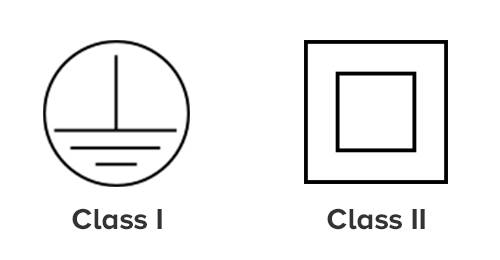
In this case, I and II are written in Roman numerals. IEC (International Electrotechnical Commission) regulations use the terms Class I and Class II to describe how a power supply is constructed internally and how it is electrically isolated to prevent users from being electrocuted.
According to the IEC
Class I LED controllers must have a protected earth connection and substantial insulation to prevent electric shock. Class I LED controllers usually have a ground connection on the supply side.
Class II LED controllers have additional safety features such as double or reinforced insulation and higher insulation levels between the input and the housing or output, so they do not have a separate earthing.
Class 1 vs. Class 2 led driver
Western numbers 1 and 2 represent the NEC (National Electric Code) standards.
Class 1: Class 1 circuits are high-power circuits that can carry up to 600 volts of electrical power. Class 1 circuits shall be installed in earthed conduits or wiring ducts. Class 1 circuits must be earthed, which means that they are connected to earth to prevent the risk of electric shock and fire. Class 1 circuits require overcurrent protection devices, such as circuit breakers or fuses, to protect against electrical overloads and short circuits.
Class 2: Class 2 circuits are low-voltage circuits limited to 60 volts or less. Class 2 circuits can be installed using less demanding wiring methods, such as basic cables or wire harnesses. Class 2 circuits do not require earthing, making them easier and cheaper to install. Class 2 circuits have less stringent overcurrent protection requirements and may only require a simple current limiting device.
That is, Class 1 and Class 2 circuits have different safety requirements according to NEC standards. Class 1 circuits are designed for high power applications requiring a high level of safety, while Class 2 circuits are designed for low power, low voltage applications where safety requirements are less stringent. Virtually all LED luminaires sold to consumers are in category 2.

Dimmable or non-dimmable led driver
Nowadays, all lights are made to be dimmable, and this is a broad topic, as there are many ways to dim lights, such as :
- 0-10V/1-10V dimmable led driver
- PWM dimmable led driver
- Triac dimmable led driver
- DALI dimmable led driver
For each point, you can access a dedicated blog article where we have discussed that particular dimming method.
Waterproof and non-waterproof led driver
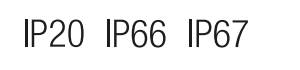
The IP(Ingress Protection) rating is used to classify the water resistance of the led driver The IP code consists of two numbers. The first number rates protection against solid objects on a scale of 0 (no protection) to 6 (no dust ingress), and the second number rates protection against liquids on a scale of 0 (no protection) to 8 (waterproof under pressure). Led transformers with an IP20 rating or lower are intended for indoor use, while waterproof drivers are used outdoors. Some indoor luminaires use waterproof LED drivers because they can produce much more power than low IP rated transformers without the need for an active cooling system, as their housing is metal.
What type of Led driver do I need?
If you want to install LED lights, it is important to choose the right LED driver to ensure that they work safely and correctly. Led transformers are an essential "''"'part of a led lighting system. Choosing the right led transformer can seem like an overwhelming task, but don't worry, we can help.
I will guide you through the process of choosing the right LED driver, including the mains voltage, the total power used by the LED system and the voltage or constant current required by the LEDs.
Voltage of the electricity network
The first step in choosing the right LED driver is to determine the voltage of the network you are using. The voltage of the grid can vary depending on your location, so it's important to check what voltage is used in your country. In Europe, for example, the mains voltage is 230 V, while in the United States it is usually 110 V.
It is important to note that some LED drivers are designed to work with a specific voltage range, so be sure to check the specifications of your LED transformer. So if you are buying a transformer on your own initiative, check the voltage carefully. Of course, many transformers operate directly in the 100-240V range.
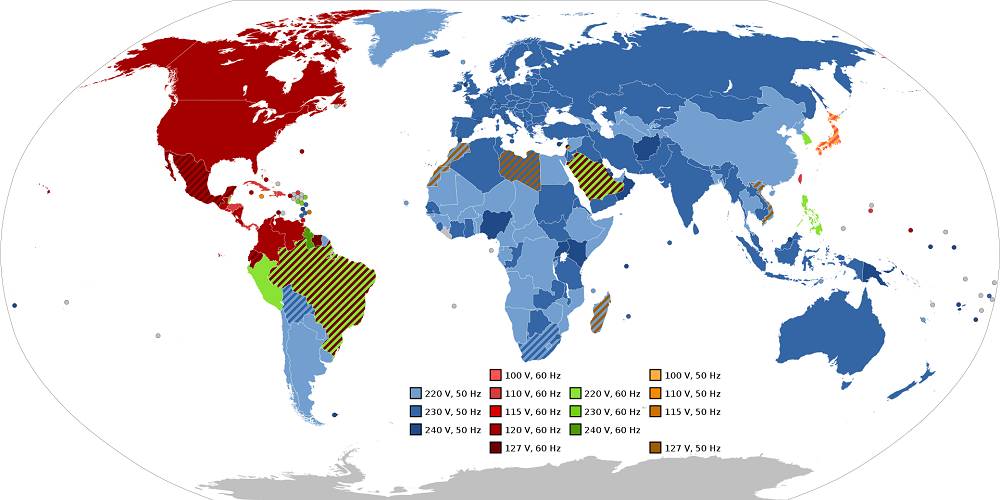
Image: Wikipedia
Total power
The second step in choosing the right LED transformer is to determine the total power used by the desired LED group. This depends on the number of LEDs in the system and the efficiency of the individual LED.
To calculate the total power, you need to multiply the number of LED lights in the system by the power of each LED light. For example, if you have 10 LED lights on the ceiling with a power of 9 W, the total power is 90 W.
Once you know the total power, you need to choose an LED driver that can provide enough power to run LED lights. The output power of the Led driver should be higher than the total power of the LED lights. For example, for 90W power you need a led driver with an output power of at least 90W, preferably a little more.
It should be noted that some LED drivers are designed to work only with a certain power (constant current), so the power of the driver must be exactly the same.
Constant voltage or constant current
The third step in choosing the right LED driver is to determine what type of voltage or constant current your LED lights need. Led drivers can provide either constant current or constant voltage for led lights according to their requirements.
For example, if your led lights have a fixed voltage of 24V DC, you will need a led transformer that provides a constant voltage of 24V DC. The voltage provided by the Led driver must match the voltage required by the LED lights.
For example, if your led lights have a fixed current of 700 mA, you need a led transformer that provides the same 700 mA constant current. The current supplied by the Led transformer must match the current required by the LED lights.
It is important to note that some led drivers can offer both constant voltage and constant current, so check the specifications of the led driver before purchasing. We are here to help. If your light has a faulty transformer, you can send us a picture of its nameplate and we can offer you a replacement. We have written about this topic before.
Lastly
In summary, a LED driver is a power supply that controls the amount of current required by an individual LED or a group of LEDs. LEDs are low-energy light sources with a long lifetime and low energy consumption, and require specialised power supplies to work properly. Led drivers are designed to match the power level required by the LEDs used. They protect the LEDs from voltage and current fluctuations and provide low-voltage power while ensuring that the temperature of the LEDs remains constant. Led transformers also protect against overvoltage and overcurrent, which can damage the LEDs. It is essential to choose the right type of led transformer for the led lights you are using to ensure safety and optimum performance.
1. Minkä jännitteen LED-muuntajan tarvitsen?
This depends on the voltage of the LED lights and the number you intend to use. In general, the voltage of the LED driver should be the same as the voltage of the LED lights. For example, if you have 12V LED lights, you will need a 12V transformer.
2. Voinko käyttää 24V muuntajaa 12V LED-valolle?
No, a 24V driver cannot be used for a 12V LED light because the voltage is too high. This can burn the LED light and cause damage to both the transformer and the LED lights.
3. Miten tarkistan LED-muuntajan jännitteen?
You can use a voltmeter to check the voltage of the LED driver. Connect the voltmeter to the output of the LED driver and read the voltage on the display. Make sure that the measured voltage corresponds to the technical specifications of the LED lights.
4. Mikä jännite on paras LED-valoille?
In general, the appropriate voltage for LED lights is specified in the manufacturer's specifications and varies according to the type and characteristics of the LED lights. Most LED lights operate at 12V, 24V or 120V/230V. It is important to follow the manufacturer's instructions to ensure optimum performance and safety.
5. Kuinka valitsen LED-muuntajan LED-valolleni?
You need to choose an LED driver with the right voltage and wattage for your LED lights. Calculate the total power (in watts) of the LED lights and make sure that the driver power is at least equal to this value. In addition, check that the LED driver has the correct connections and features, such as an IP rating if you are installing it in humid or dusty environments.
6. Onko jännitteellä merkitystä LED-valoille?
Yes, voltage does matter for LED lights. Too high a voltage can damage an LED light, while too low a voltage may not be enough to turn on the LED light. Using the correct voltage will ensure that your LED lights will work properly and last a long time.
7. Voinko käyttää pienemmän tehoista LED-muuntajaa?
Depends on the efficiency of the LED lights and the number you use. If the LED driver is too small, it may not be able to operate all the LED lights at full power or the LEDs may not turn on. It is important to ensure that the driver has enough power to cover the total power of the LED lights.
8. Onko 12V vai 24V parempi LED-valoille?
This depends on the characteristics of the LED lights and your needs. In some cases 12V is more suitable, while in others 24V is better. 24V LED drivers have the advantage of better current transfer, i.e. the voltage does not drop over longer distances, which improves the uniformity and efficiency of the lighting, especially with longer light strips.
9. Kuinka lasken LED-muuntajan tehon?
The power (W) of the LED driver is calculated according to the total power (W) of the LED lights. Add up the wattages of all LED lights and make sure that the wattage of the driver is at least equal to this total wattage. It is recommended to choose a transformer with a slightly higher power than the calculated total power (e.g. 20% extra), so that the system will work properly in case of future expansions.
10. Kuinka monta lediä voin laittaa yhdelle muuntajalle?
This depends on the power of the LED driver and the efficiency of the LED lights. Calculate the total power (W) of the LED lights and make sure that the driver power is sufficient to cover this. For example, if you have 10 LED lights, each with a power of 5W, you will need a driver of at least 50W. Add a 10-20% spare factor to this if necessary.
11. Soveltuuko mikä tahansa LED-muuntaja mihin tahansa LED-valoihin?
No, the LED driver must be suitable for the voltage, wattage and characteristics of the LED lights. It is important to ensure that the driver provides the correct voltage and current for the LED lights and that the driver connections are compatible with the LED lights. It is also important to check that the driver supports the required features, such as dimming if required by the LED lights.
12. Voinko käyttää suurempitehoista LED-muuntajaa?
Usually DC voltage, yes. Depends on the efficiency of the LED lights and the power of the LED driver. A higher power LED driver may work, but it may also cause overheating or damage to the LED lights. In the case of a current driver, it cannot be used with a higher power transformer.
13. Miksi LED-muuntajat hajoavat?
LED drivers can fail for a number of reasons, such as overheating, moisture damage, overloading or incorrect use. Using the wrong type of transformer, such as too high or low voltage, can also lead to transformer failure. In addition, poor quality components and manufacturing defects can shorten the life of the driver.
14. Mitä tapahtuu, jos ylikuormitan LED-muuntajan?
Overloading can damage the LED driver or even cause it to break. This can also damage the LED lights used by the transformer. However, a good quality LED driver will turn itself off in the event of an overload and protect itself and connected devices.
15. Mikä on LED-muuntajan käyttöikä?
The lifetime of an LED driver depends on the quality of the manufacturer and the operating conditions of the LED driver. A good quality LED driver usually has a lifetime of several years, up to more than 10 years, when used correctly and protected from overheating and moisture damage.
16. Voinko kytkeä yhteen kaksi LED-muuntajaa?
NO, if it is an AC voltage. The starting cycles of the transformers do not coincide and may damage them and cause flashing. Yes, if DC voltage is involved. DC drivers can work together, but it is important to ensure that they are compatible and that their total power is sufficient for the LED lights without overloading.
We are familiar with the control technology of Led lighting
LedStore has been an expert in LED lighting and lighting design since 2010. We have our own product design, so our products are technologically state-of-the-art. Products have quarantee for up to 7 years. We also carry out lighting maintenance.
We focus on temperature-controlled and high colour rendering lights, so they work brilliantly and last a long time. We carry out hundreds of lighting designs for our clients every year. Read more here or order a lighting design
We offer a service of custom-made LED strips, i.e. custom-made LED strips in aluminium profile. Also installed. LedStore offers lighting design from 169 euros for the whole house!
Remember that Lamppukauppa Led Store Oy is always ready to support you along your journey by email (myynti@ledstore.fi) and by phone (045 251 4510). Feel free to share photos of your own projects on social media #ledstore.fi on IG and ledstorefinland on FB. We love to see the cool things you can do with our LEDs, and the pictures help provide inspiration for those who are unsure about the power and awesomeness of LEDs.
Did you know that we already have over 3 500 pictures of our LED installations in our Gallery!
Photo gallery of Led lights:
Product gallery: Pictures of PRODUCTS in different installation locations
Indirect light: Indirect light in different spaces
Room-specific: Light in different rooms
References: Complete houses that have been photographed
