Living room lighting design is the most important part of home lighting design. The living room is where guests are entertained, the family gathers and watches TV under the blanket. So, depending on the situation, well-designed living room lighting will always meet the need and adapt to the situation. In this blog post, we explore some important aspects of living room lighting design and offer tips and ideas for creating the perfect living room lighting.
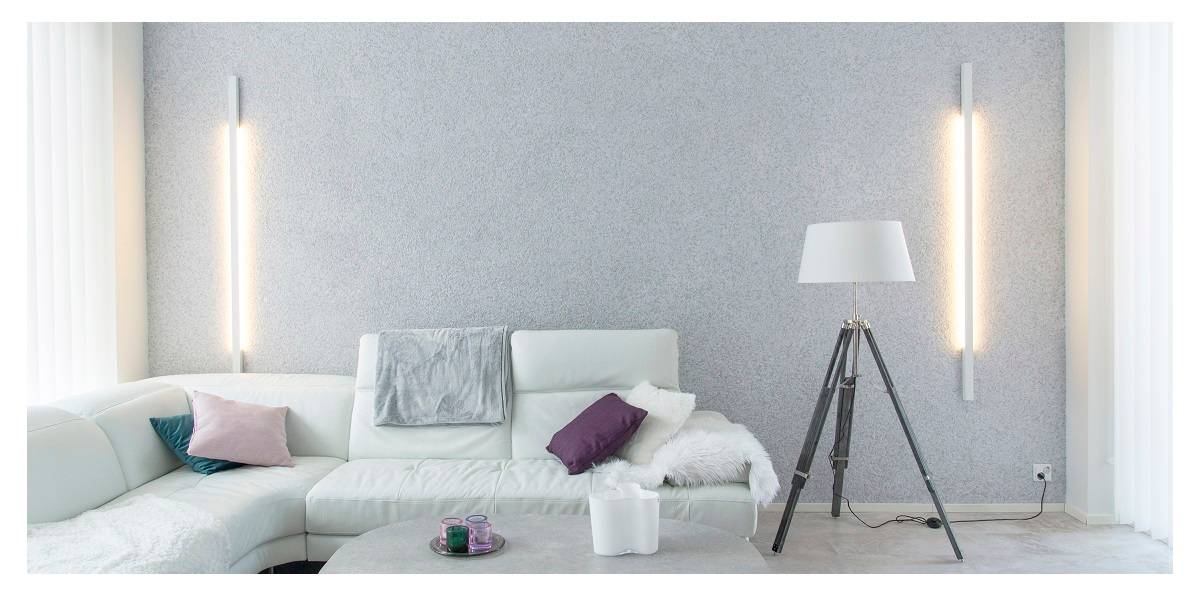
Light is one of the main drivers of our circadian rhythm and has a significant impact on our overall health and well-being. Even the lighting in the living room can be intelligently designed to match the outdoor lighting.
Living room lighting - how to design lighting?
First, it is important to consider the primary functions of the living room and how lighting can support these functions. For example, do you need bright task lighting for reading? Or are you looking for a softer, more atmospheric light for relaxation? Is your home interior warmer or more neutral?
The lighting design of a living room is an important factor in creating a comfortable and functional space. By taking into account the main functions of the room and using a combination of different light sources, you can create lighting that meets your needs and enhances the overall atmosphere of the room. Remember to also take into account the colour temperature of the lamps and the role of natural light in the living room.
Please note: Large windows only serve half the year. In lighting design, windows are taken into account in the design, but not much value is added to the amount of light from the windows.
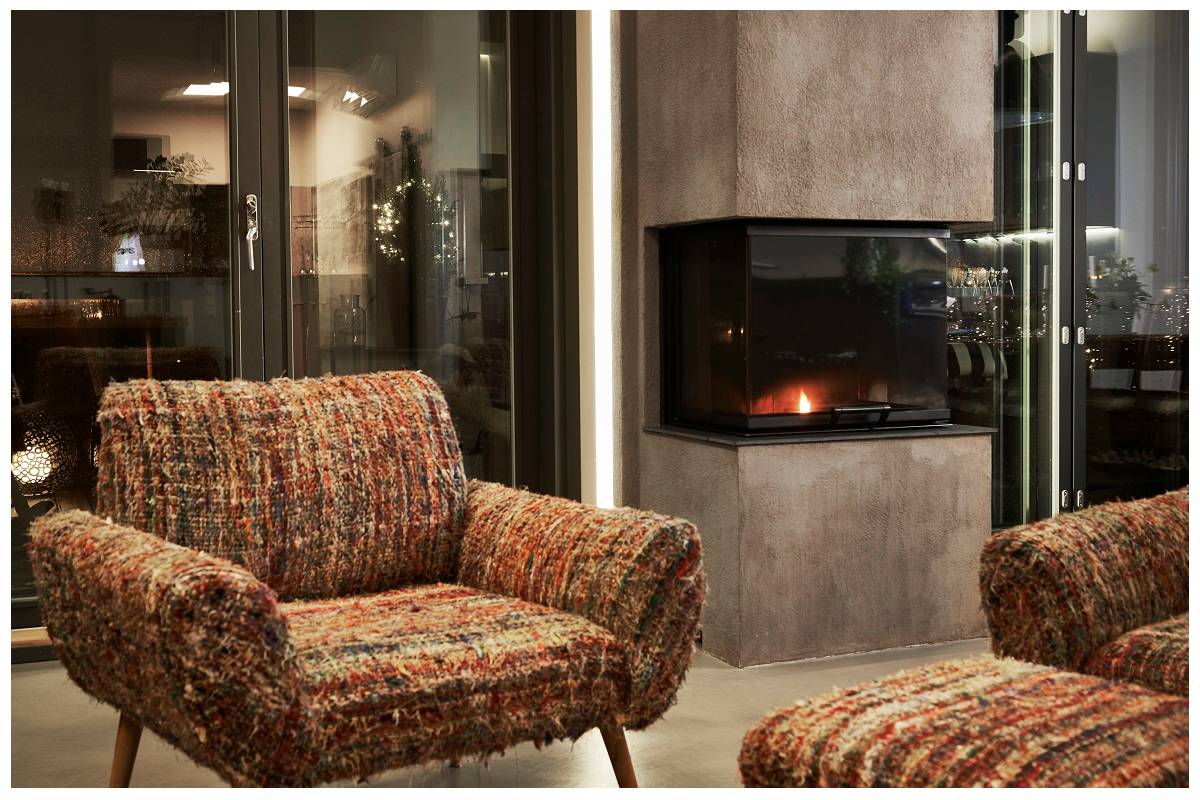
With the right lighting design, you can transform your living room into a relaxing and inviting place for family and guests, which also works for lighting all year round.
Living room lighting design - Types of luminaires
Ceiling lighting, such as a ceiling light or chandelier, can provide general illumination throughout a room and has often been the primary source of light in the living room. Nowadays, there are fewer pendant luminaires in the living room and the general lighting is more often provided by LED panel luminaires or LED spotlights.
Select the light source you prefer and the counting of the number of luminaires starts according to the square footage and height of the space. Most high quality LED luminaires are also temperature adjustable.
Wall lights can be great for evening activities such as watching TV. They also add a decorative touch to a room and can be used to emphasise the height of a space.
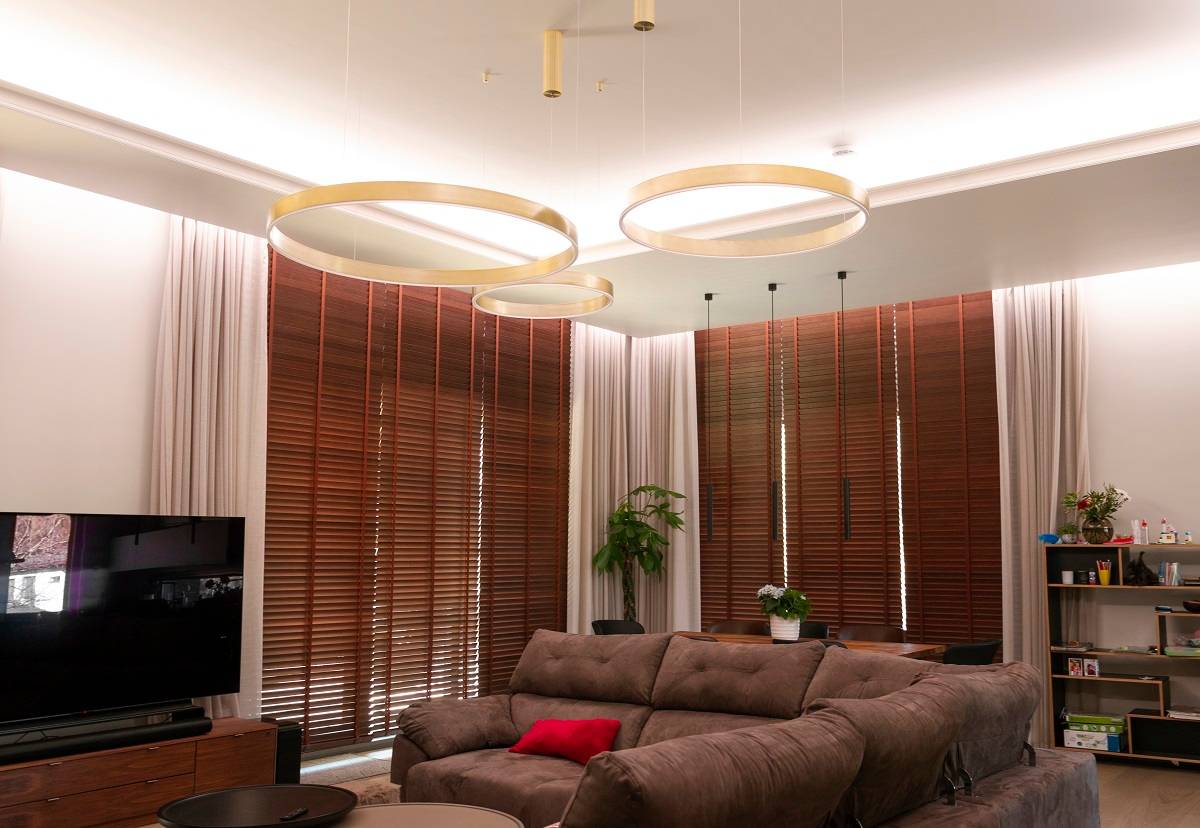
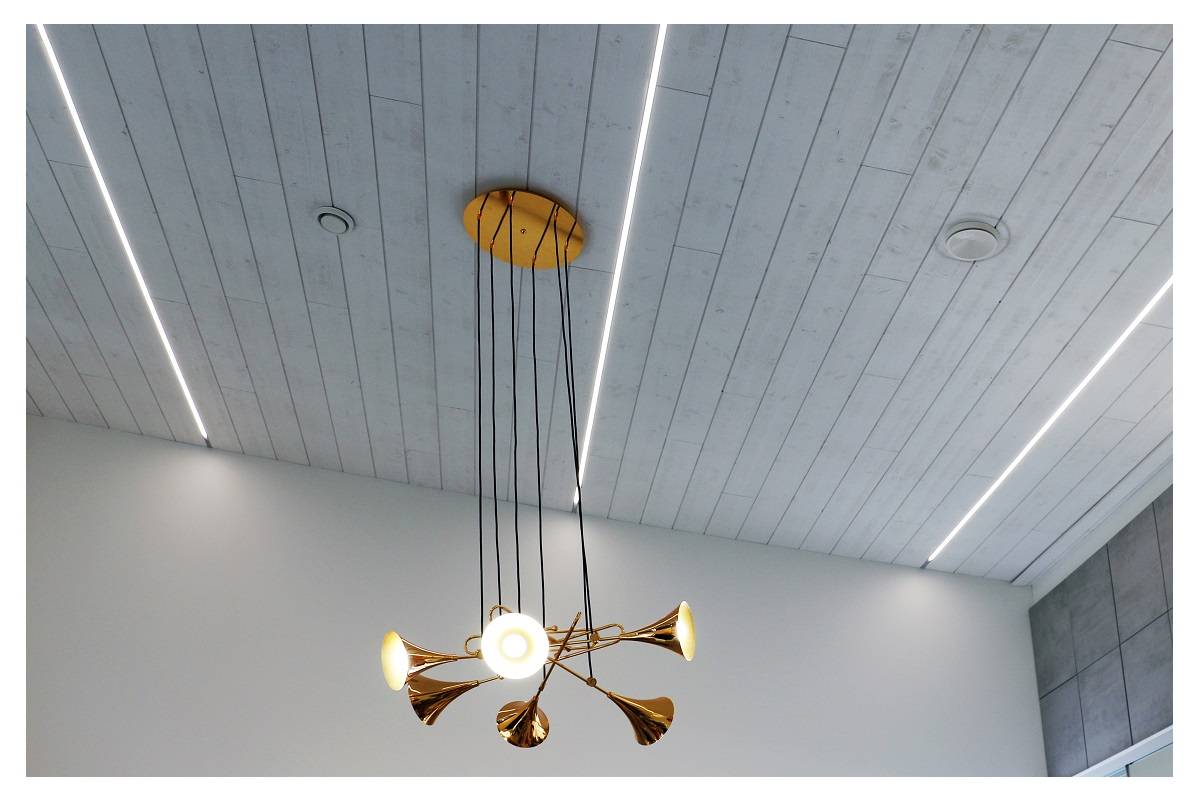
Indirect lighting is the easiest way to make your living room look impressive. By lowering the ceiling at the edges or just leaving the light at the wall/ceiling boundary, you can create an atmosphere in even the largest of spaces. Not to mention layering a flat, boring roof. Play with light and highlight structures. The lighting design of a living room can also be a structural design.
Verhovalo
Curtain lights became very popular in the 80s. Back then, they were made a lot with fluorescent tubes. Nowadays, a lot of curtain lighting is done with Led stripon a large window wall, even if there is no curtain. So let's use light to create curtains on the window surface. Of course, usually there are curtains and the LED strip is installed in front of the curtain, on the side of the room. For curtain lighting and indirect lighting in general, LED strips with temperature control are used in particular. With CCT LED strips, you can easily change the atmosphere of a room from fresh for cleaning to warm for an evening movie marathon.
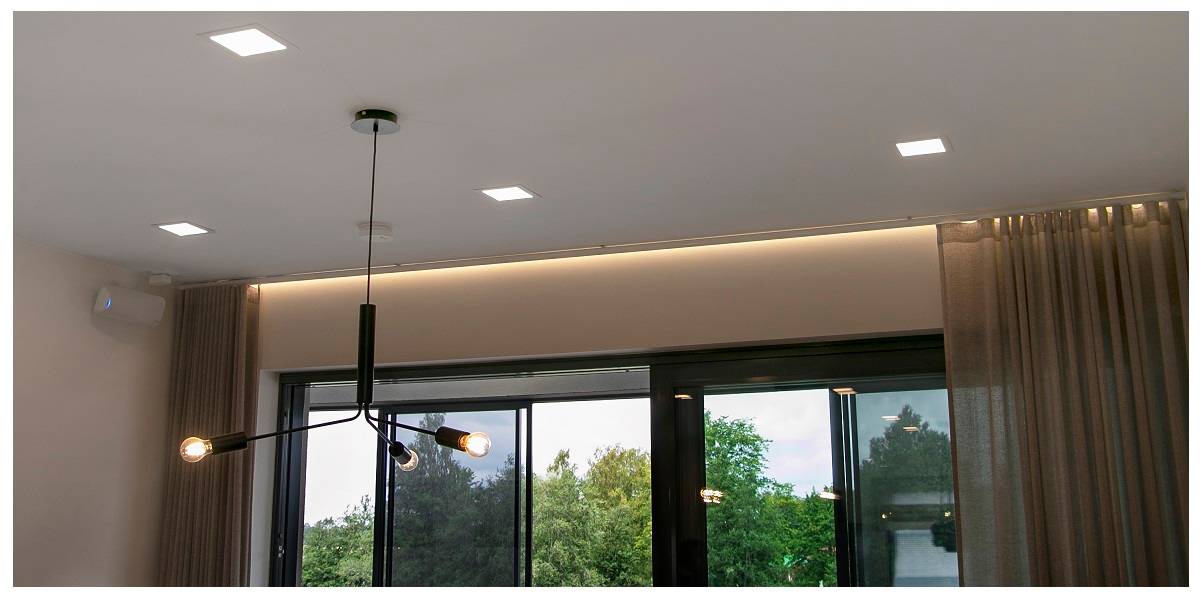
Indirect lighting in the living room
As in any space, layering the three basic lighting options (general lighting, indirect lighting and task lighting) will help you get the most out of your living room lighting options, and is key to creating an effective living room lighting design.
The most popular way to light a living room is indirect lighting. Indirect lighting in the living room gives the space an atmospheric look and with the right placement of the down counters, you can make your space look really stylish and luxurious in your home. There are also ready-made indirect LED profiles, which are an easy way to implement indirect lighting in your living room.
So there are different solutions for creating indirect light in the living room. Here are a few:
Calculate the edges of the roof, and illuminate the centre of the roof. The idea here is to carry the building services from the edges and thus leave the central area higher. Height difference usually 20-30cm
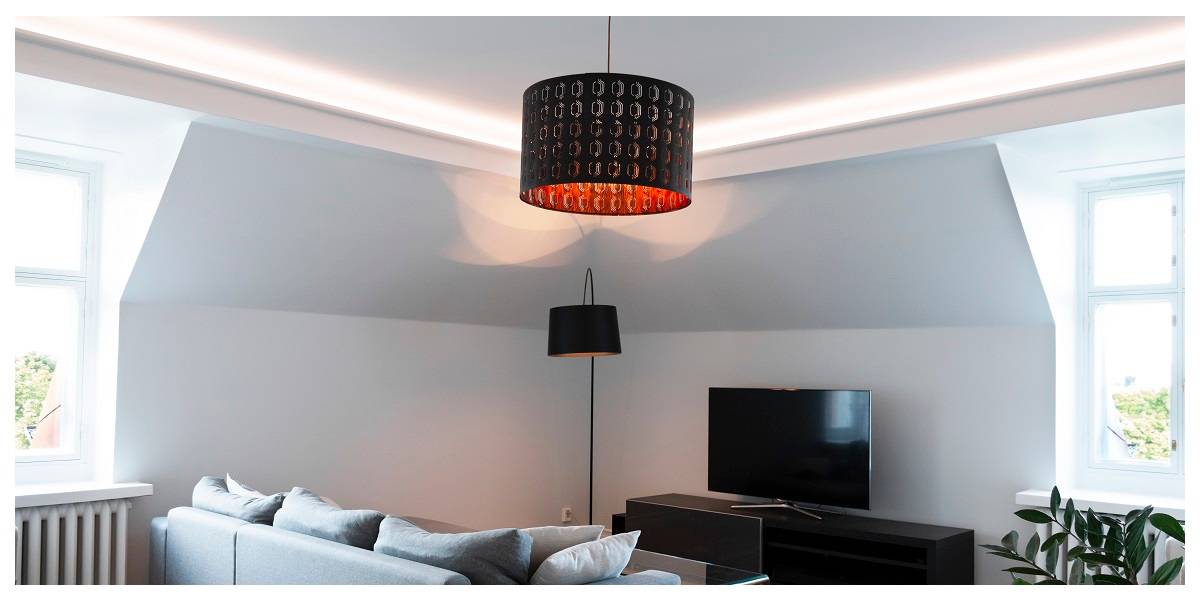
Leaving the edges of the roof incomplete at the roof assembly stage. In this method, indirect light comes down the wall.
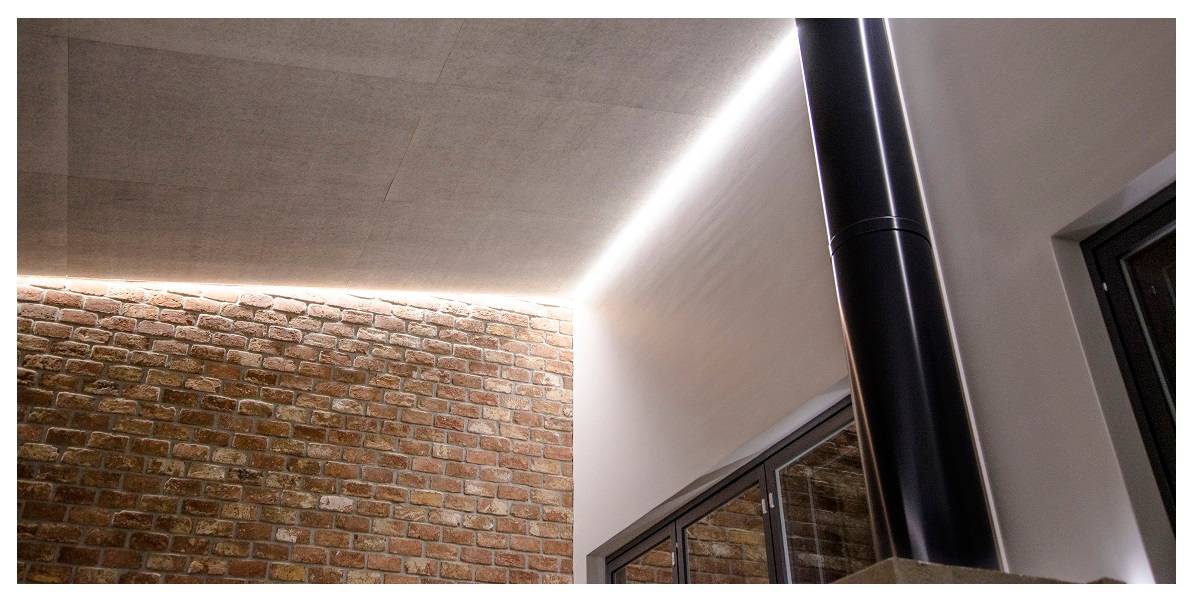
Retrofitted indirect light profiles. These can often be fully retrofitted, or if it is decided during the construction phase to use them as a replacement for the roof slate.
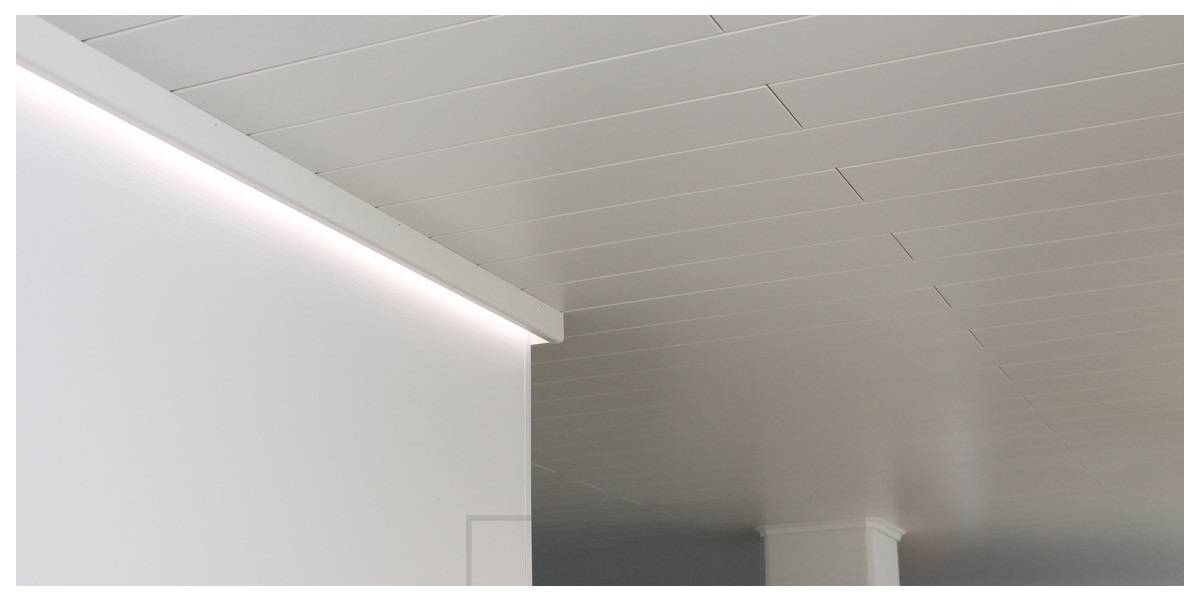
Led lights for living room ceiling
The most common led lights for living room ceilings are led spotlights or also known as led down lights. LED panels have also become very popular. As the space is usually large, we recommend using less of the more efficient lights. This is because there will be fewer holes in the ceiling and the ceiling will quickly start to resemble a cheesecake.
When using led panels, it is good to have either a few large ones that look like ceiling lights, or several smaller ones.
All good quality LED spots and LED panels are nowadays temperature adjustable, which is something you should take into account when designing.
Good general lighting
Good general lighting is achieved with indirect light or spot light combined with general light. Indirect light in front of curtains or in the ceiling brings invisible light into the space, which helps to create atmosphere, and is then complemented by spotlights and pendant lighting in the ceiling.
The narrow-angle lighting on a piano or table can help you relax. Accent lighting also allows you to diffuse light and draw your eye around the room, making the space feel larger and more balanced. When designing accent lighting for a living room, it is a good idea to know the furniture in the room.
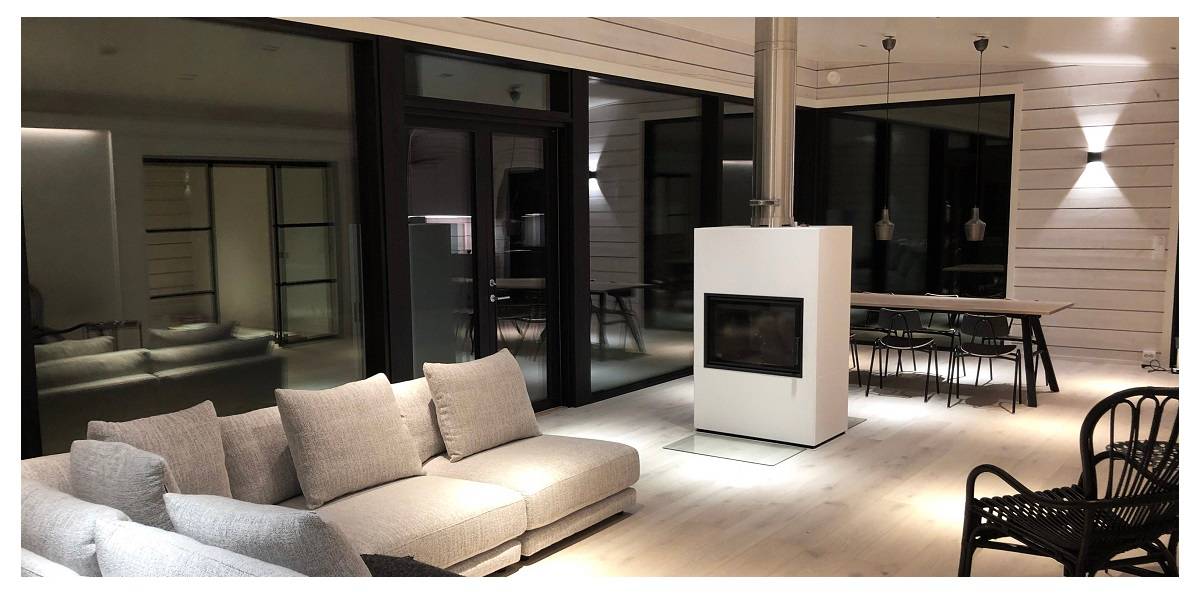
Living room LED lighting in different areas
If your living room functions as more than just a living room, you'll want to add even more flexibility to your lighting design by creating zones. In addition to balancing light, creating lighting zones in different parts of a space can make lighting design and management easier. Such spaces can be a reading corner, a piano, a TV corner.
Ambient lighting for your living room
One of the easiest ways to use lighting to create atmosphere is to use dimmers and temperature-controlled lights. With temperature-controlled lights, the mood is always right.
Low living room lighting
Low space is always a challenge. Then you avoid using pendant lights and think about how to make the space feel higher. Roof lighting is an effective way to do this.
- The roof is well lit with a sloping roof from the edges. If the height of the space before lowering is more than 240 cm, we recommend lowering the ceiling from the edges by 15 cm to 20 cm, so that we can create a frame for the ceiling lighting.
- Another way to illuminate the ceiling is to use an indirect light profile and LED striplight designed for it.
- A third way is to put a vertical light surface in the corners, for example by using a corner LED profile.
If the whole ceiling can be lowered by even 5 cm, then all lighting options are possible. Spot/panel lights + indirect light.
The best solution for this is a combination of down lights and indirect light, which can be freely temperature adjusted and dimmed as needed. In other words, the same lighting can make it warm or cool if you want!
Lighting for a high living room
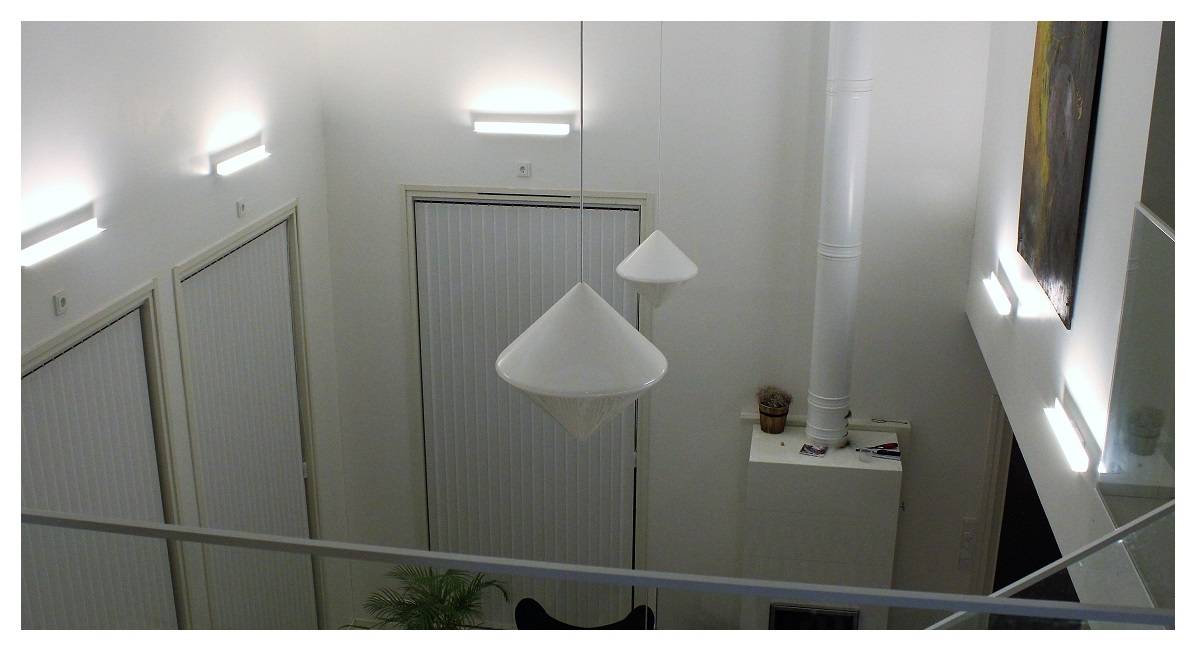
High space also creates its own challenges. Depending on the light, the light loses about 90% of its luminous intensity over a distance of 6 metres from the ceiling to the floor, and pendant lights with 3-4 metre cables are harder to find. The solution is to bring the light sources lower, halfway down the room.
- Indirect lighting at mezzanine level. For example, an indirect led profile between windows. This way the light source is lower and the lower power is sufficient
- Another way is to use lights with a narrow beam so that the light output is not lost so much over the distance. Note that there should be several such lights if you want to avoid light and shadow play, as the narrow beam is visible on the floor and of course this is not the only source of light.
- A third way is to install wall lights around the perimeter at a lower level.
- a fourth method is to embed an LED striplight in the floor next to the walls, so that the wall surface acts as a reflector.
Living room ceiling light - What size light?
Getting a ceiling light for the living room is a challenge in itself. How many square metres and how high is the room? What is your interior design style? So finding a pendant light for your living room is not easy. For example, a RINKELI 100cm gives 3000 lumens on the sides, so yes you can watch TV in the room, but for working, reading, etc. is not yet possible without a supplementary lamp.
Large LED panels provide even general lighting and for example in a 20m2 living room 2 large 600x1200 LED panels provide good general lighting.
Only use lights with a high CRI or colour rendering index. So quality light helps you see better and, most importantly, a red sofa cushion is still red and not purple.
Amount of light in living room lighting
This brings us to the topic of the amount of light in the living room. The brightness and colour temperature of lighting can both have a positive or negative impact on your activities and general well-being. If the lighting is warm all the time (3000K) I notice that you are more tired and your vision is slightly worse than in fresh lighting.
Therefore, adjusting the temperature of the light is important and these things can be taken into account when designing the lighting in your living room. Fresh light in the morning and early evening and warmth towards evening when you want to relax. It has also been studied that sleep is better when the body receives less blue light. When choosing the right luminaires for your living room lighting, there are two things to consider: lumens and light colour temperature.
Number of lumens in the living room
When LEDs are very energy efficient, looking at watts in the traditional way doesn't help. Lumen levels are used to design the amount of light.
For example, the total number of lumens in a 20 m2 light living room will vary between around 2000 and 4000, depending on your personal preferences. If the room is dark or high, this figure can easily be doubled or tripled. This figure is then divided between the different sources of light. Different light intensities are recommended for different uses and lighting zones:
- Night lights 50-100 lumens
- To the reading point 1 000 lumens
The lighting design of a living room takes into account the amount of light when the types of lighting are known.
What colour temperature, or Kelvin, is good for the living room?
Colour temperature is one of the most important aspects of living room lighting, as it can have a significant impact on our wakefulness and productivity.
2500-3500K Warm light helps you fall asleep and relax, and creates a cosy atmosphere.
4000K-6500K Cooler white and blue light have been shown to promote alertness by inhibiting melatonin production, making them ideal for task lighting in the workspace.
The right solution for multi-purpose spaces is always to use CCT LED lights. This ensures that the amount of light and the temperature of the light is right for each task.
What does it cost to light your living room?
Are you ready to design your living room lighting? Then you're probably wondering how much will living room lighting cost? The cost of living room lighting is affected by the use of the space. Will there be indirect light, etc..
Living room lighting ideas
In these galleries you will find direct living room lighting ideas:
Indirect lighting in the living room
Different types of living room lights and their use in living room lighting design
Finally, here is a summary of the types of lighting used in the living room. By choosing the right lamps for your living room lighting, you can create a functional and atmospheric environment.
Indirect light: indirect light creates limitless solutions to create mood. Wall lighting through the ceiling or ceiling lighting through the walls. Indirect light is usually always built with downlights and an LED strip in profile. Indirect light can also be retrofitted with an aluminium profile to create indirect light.
Spotlights: spotlights are lights used to highlight specific features or areas. They are mounted on the ceiling like general lighting spots, but have a narrow beam.
General lights: general lights are spotlights with a wider beam or LED panels for the bedroom. As their name suggests, they bring general light into a space.
Step lights: step lights are small, low-powered lights used to illuminate a corridor or pathway. They can be embedded in walls so that people can navigate safely in the dark.
Wall lights: wall lights are lights that can be connected to the walls of a room by means of a fixed mains power supply or a plug. They can be used for general lighting or to create atmosphere.
Some of our other lighting design articles:
Bedroom lighting design can be found in the category home led lighting
Outdoor lighting design is a comprehensive article on the possibilities of outdoor lighting
How does home lighting design affect you? - a comprehensive article on design
Led lighting expert
LedStore has been an expert in LED lighting and lighting design since 2010. We have our own product design, so our products are technologically state-of-the-art. We are also very familiar with the design of living room lighting.
We focus on temperature-controlled and high colour rendering luminaires, so they work brilliantly in the modern bedroom, which is often also a multi-functional space. We do around 500 lighting designs for our clients' sites. Read more here or order a lighting design
We offer a service of custom-made LED strips, i.e. custom-made LED strips in aluminium profile. Also installed. Did you know? LedStore offers lighting design from 169 euros for the whole house!
Remember that we are always ready to offer our help to you along the way, by email (myynti@ledstore.fi) and by phone (045 251 4510). As always, feel free to share photos of your own projects on social media on #ledstore.fi IG and ledstorefinland FB. We love to see the cool things done by our LEDs, and it also helps to provide inspiration for those who are not sure about the power and awesomeness of LEDs. Did you know that we already have over 3500 pictures of our LED installations in our Gallery!
A picture gallery of LED lights to help you design your living room lighting:
Product gallery: Pictures of PRODUCTS in different installation locations
Indirect light: Indirect light in different spaces
Room-specific: Light in different rooms
References: Complete houses that have been photographed
1. Miksi olohuoneen valaistus on niin tärkeää?
The living room is the central living area of the home, where people relax, socialise and spend time with family and friends. Well-designed lighting creates a pleasant atmosphere and helps to adapt the light to different situations, such as reading or watching a film.
2. Miten luoda kerroksellinen valaistus olohuoneeseen?
Layering is achieved by combining general, ambient and mood lighting. General lighting provides basic ambient lighting, task lights highlight specific elements of the interior or workstations (such as a reading chair) and mood lights create a soft, relaxing level of light in a space. This makes the overall effect functional and comfortable.
3. Mikä värilämpötila sopii olohuoneeseen parhaiten?
Most people prefer a warm white (around 2700-3000 K) light shade for their living room. Warm light is perceived as cosy and comfortable, as well as being conducive to relaxation. If you prefer a slightly fresher atmosphere, neutral white (around 4000 K) can also work, as long as it's not too much.
4. Miten huomioida erilaiset toiminnot olohuoneessa valaistuksen avulla?
The living room is often used for relaxing, watching TV and reading. Design lighting for each use: a bright and directional reading light, a soft backlight for TV viewing to create a pleasant contrast with the screen, and general lighting to ensure there are no dark corners. Dimmable lights or smart lighting make it easy to adjust.
5. Onko älyvalaistuksesta hyötyä olohuoneessa?
Yes. With smart lighting, you can control your lights with an app or voice commands, and schedule lighting situations. For example, for relaxing and watching a movie, you can create separate lighting profiles, so you can get the mood you want in your living room at the touch of a button.